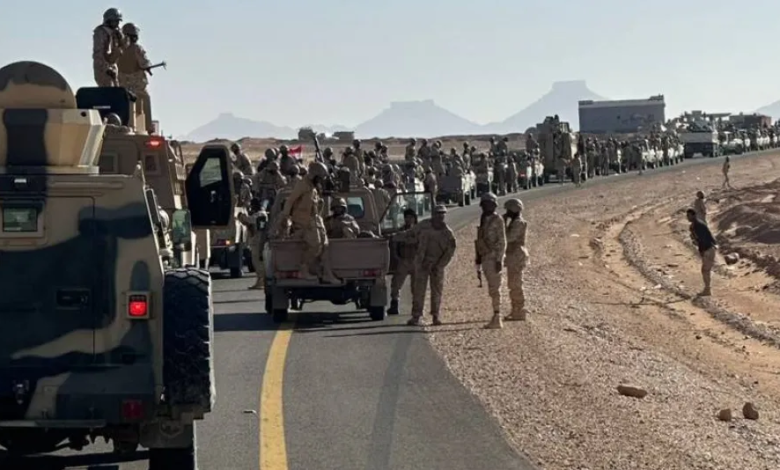
Clashes and raids in Hadramawt: Details of the operation to take over the camps

Hadhramaut Governorate, the largest and most strategically important governorate in Yemen, has witnessed rapid military developments, including armed clashes and airstrikes, coinciding with the start of what has been termed the "handover of military camps." These events cast a dark shadow over the security situation in the governorate, which had long remained largely untouched by the direct conflict ravaging the country, raising widespread fears of the region descending into violence and chaos.
Background to the security tensions in the Hadramawt Valley and Desert
These clashes cannot be understood in isolation from the complex historical and political context of Hadramawt Governorate, particularly its valley and desert regions. For years, security in these areas has been the subject of intense power struggles between government forces, represented by the First Military Region, and calls from local forces and southern political groups demanding that the people of the governorate be empowered to manage their own security and military affairs. The "takeover of military camps" operation that ignited the recent tensions is part of an ongoing effort to reshuffle the military landscape in the governorate, a move that is often fraught with on-the-ground complications and mutual mobilization by rival factions vying for influence.
The strategic importance of Hadhramaut and the impact of the conflict
Hadhramaut holds exceptional importance that transcends the local level, reaching regional and international dimensions. It represents Yemen's main oil reservoir, possesses a long coastline, and borders Saudi Arabia. Any security instability in this governorate not only threatens the stability of local communities but also jeopardizes Yemen's already fragile economy and could impact energy security and shipping lanes. The transformation of the handover of military camps into an arena for military confrontations and airstrikes reflects the deep crisis of confidence among the various actors and suggests that military solutions may precede political ones at this critical juncture.
Potential repercussions and the future of stability
The use of airstrikes in these clashes is deeply concerning to observers and human rights organizations, as it raises the cost of the conflict and increases the likelihood of civilian casualties and the destruction of infrastructure. Furthermore, this escalation could undermine international and UN efforts to establish peace in Yemen, especially since Hadramawt was considered a relatively stable region compared to other governorates. The current situation requires urgent intervention from the Presidential Leadership Council and the sponsors of the political process to contain the situation and ensure that military restructuring or the handover of positions is carried out peacefully and in an orderly manner, thus preventing the governorate from being dragged into a protracted conflict with potentially catastrophic humanitarian and economic consequences.