Yemen: King Salman Center continues its successful efforts to combat cholera

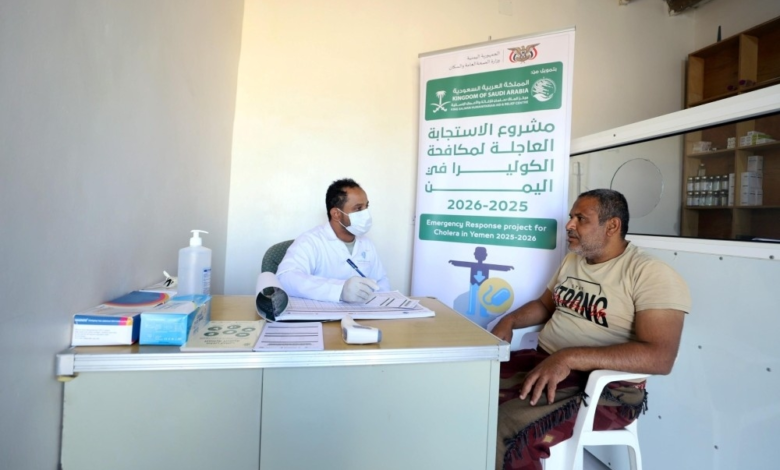
The emergency cholera response project in Yemen, supported by the King Salman Humanitarian Aid and Relief Center , continued to provide vital medical and preventative services, benefiting 130 individuals with treatment and diagnostic services between January 7 and 13, 2026. These efforts are part of ongoing endeavors to contain epidemics and ensure the safety of citizens and travelers in various Yemeni governorates.
Details of field and awareness services
During the week in question, the project's activities focused on conducting thorough and comprehensive screenings to detect suspected cases of cholera. These screenings took place at strategically vital locations, including the airports of Aden, Al-Rayyan, and Seiyun, as well as land border crossings such as Al-Wadi'ah and Razih, and the screening points in Al-Hafiyah. Medical teams covered a wide area encompassing coastal and inland Hadramawt, Aden, Hajjah, and Sa'dah.
Field reports confirmed the success of the preventive measures, with no suspected or confirmed cases of cholera recorded among those screened during this period, reflecting the effectiveness of the monitoring and surveillance systems. In parallel with the medical efforts, the project intensified its awareness campaign by conducting 278 health education sessions, benefiting 5,123 individuals, with the aim of raising community awareness about methods of preventing the epidemic and the importance of personal and public hygiene.
Context of the health crisis and cholera challenges in Yemen
These efforts are of paramount importance given the complex health situation in Yemen. The Yemeni health sector has faced immense challenges over the past years due to the conflict, which has damaged water and sanitation infrastructure, creating a fertile ground for the spread of waterborne diseases such as cholera. Current proactive interventions are crucial to preventing a recurrence of the widespread outbreaks the country has experienced in the past, which placed immense strain on the already overburdened health system.
Project strategy and sustainable goals
The cholera control project primarily targets the most vulnerable areas and operates according to an integrated strategy aimed at reducing disease rates and limiting its spread. This strategy includes:
- Epidemiological surveillance: Deploying specialized medical teams at air and land ports of entry to examine travelers.
- Logistical and medical support: Providing health facilities with necessary supplies, including intravenous and oral rehydration solutions, antibiotics, and sterilization materials.
- Strengthening capabilities: Expanding the clinical capacity in isolation and treatment centers to ensure readiness for any health emergency.
The humanitarian role of the Kingdom of Saudi Arabia
This initiative is an extension of the leading role played by the Kingdom of Saudi Arabia, represented by the King Salman Humanitarian Aid and Relief Center, in supporting the brotherly Yemeni people. This assistance is not limited to food relief alone, but also includes substantial support for the health sector to ensure the continuity of medical services and combat infectious diseases, thus contributing to strengthening regional health security and alleviating the suffering of the most vulnerable groups in Yemen.