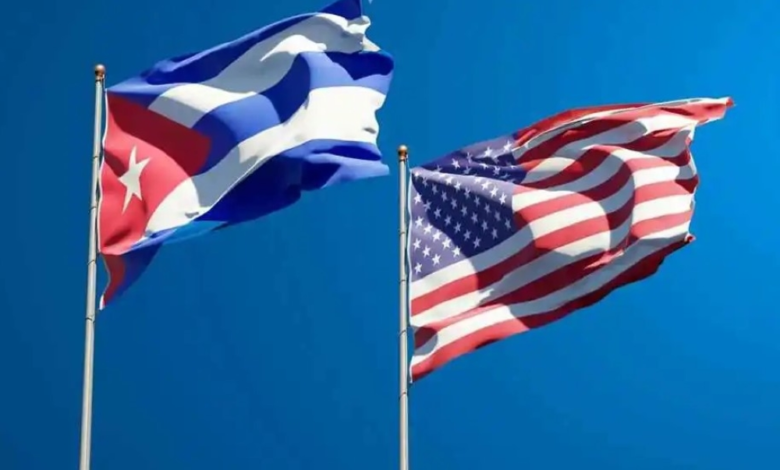
Cuba on alert: The Cuban military prepares for a possible US military attack

Tensions escalate: Cuban military on high alert
Amidst rapidly evolving geopolitical developments on the international stage, Cuban Deputy Foreign Minister Carlos Fernández de Cossío affirmed that Havana is taking proactive steps and preparing for the possibility of an invasion or military aggression by the US military. These remarks came during a televised interview broadcast by NBC, where the Cuban official explained that despite its military preparations, his government does not wish to further escalate its already complex relationship with the United States and the administration of President Donald Trump.
Havana's official stance on potential threats
In his remarks, De Cossio emphasized that the Cuban armed forces are on constant alert, stating, “Our army is always ready. In fact, these days it is preparing for the possibility of military aggression. In light of what is happening in the world, it would be naive not to.” However, he left the door open to diplomatic solutions, adding, “But we hope that this will not happen. We see no reason for it to happen, nor how it could be justified.” He affirmed that Cuba is not seeking any armed conflict with Washington, but rather has a legitimate need to protect its sovereignty, expressing Havana’s complete readiness to sit down at the negotiating table to resolve differences peacefully.
Historical context: Decades of conflict between Cuba and the United States
To understand the roots of this tension, one must look back at the long history of hostility between the two countries. Since the success of the Cuban Revolution and Fidel Castro's rise to power in 1959, Washington has pursued policies hostile to the communist regime on the island, located just a few miles off the coast of Florida. This hostility has manifested itself in numerous attempts to overthrow the regime, most notably the failed Bay of Pigs invasion in 1961, which was supported by the CIA. This was followed by the Cuban Missile Crisis of 1962, which nearly triggered a global nuclear war. Since then, the United States has imposed a crippling economic, commercial, and financial embargo on Havana—what Cuba calls a "blockade"—which has severely impacted Cuban infrastructure and the economy for decades.
Economic pressures and the impact of regional alliances
In recent years, Washington has intensified its economic pressure on Cuba. This pressure has included attempts to cripple the Cuban economy by imposing an embargo on fuel supplies to the island, a measure directly linked to the close alliance between Havana and Caracas. These US actions coincided with pressure on Venezuelan President Nicolás Maduro, one of Cuba's key strategic allies in Latin America and its main oil supplier. This economic strangulation has led to internal crises in Cuba related to shortages of fuel and basic goods, further exacerbating the already tense situation.
Trump's statements and their regional and international repercussions
What exacerbated Cuban fears were the repeated statements from the US administration. US President Donald Trump had previously expressed his belief that he would have the “honor of taking over Cuba,” speaking at the same time of “liberating” it, without providing any clear details about the mechanism he meant, whether military or political. These statements, in a tense international climate, are pushing the Cuban leadership to take the worst-case scenarios very seriously. Any military escalation in the Caribbean region would not only have repercussions for Cuba and the United States, but would extend to affect the stability of all of Latin America, and could invite intervention or condemnation from other international powers that oppose military intervention and support national sovereignty.