NATO's future is at risk: Denmark warns of the repercussions of the Greenland crisis

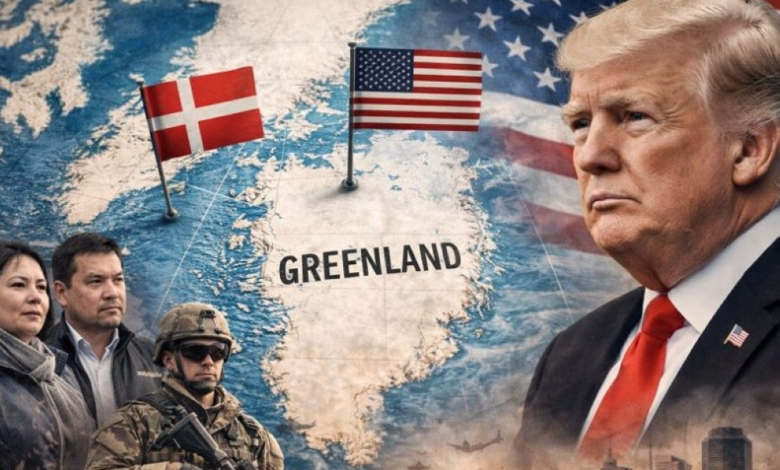
Danish Foreign Minister Lars Løkke Rasmussen issued a stark warning about the future of Western alliances, asserting that the existing world order and the future of NATO are at stake. These fiery remarks, made on Sunday, reflect growing European concern about the political and economic policies of US President Donald Trump, particularly regarding Greenland.
Economic threats and geopolitical tensions
Rasmussen explained that European concerns are growing in light of the explicit threats made by the US president to impose punitive tariffs on European countries that oppose his efforts or stand in the way of his ambitions to acquire Greenland. These remarks came during the Danish minister's visit to Norway, another country threatened with additional tariffs, indicating a looming diplomatic crisis across the Atlantic.
Background to the conflict: Why Greenland?
To understand the depth of the crisis, one must return to the historical and strategic context of Greenland. It is not merely a vast expanse of ice; it is the world's largest island and enjoys self-governance under the Danish crown. The island's importance lies in its vital strategic location in the Arctic, a region witnessing escalating international competition among the great powers (the United States, Russia, and China). Furthermore, Greenland is rich in vast natural resources and rare earth minerals essential for modern technological and military industries, making it a strategic target for Washington.
The future of NATO and European solidarity
In response to these threats, Rasmussen, during a joint press conference with his Norwegian counterpart Espen Barth Eide, emphasized the need for European unity. He stated, "I have no doubt that there is strong European support for Denmark." He added defiantly, "We have a powerful force... when we flex our muscles collectively and in solidarity, and that is, of course, what we must do.".
Observers believe the danger of the situation lies not only in the trade dispute, but also in its direct impact on the cohesion of NATO. The use of economic sanctions by the United States—the backbone of the alliance—against its close allies (Denmark and Norway) due to regional ambitions strikes at the very heart of the principle of mutual trust and collective defense upon which the alliance has been founded, and threatens a crack in the western bulwark that could be exploited by NATO's international adversaries.