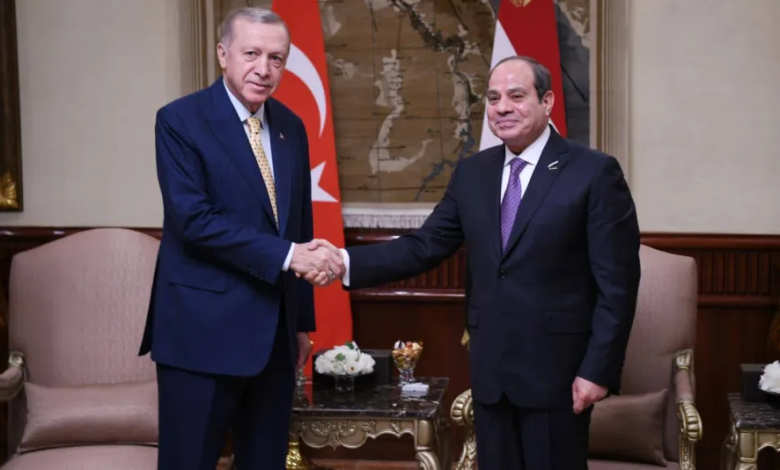

Diplomatic relations between Cairo and Ankara have witnessed significant activity recently, with the two countries agreeing to enhance joint coordination and exchange views regarding developments in the Gaza Strip, in addition to discussing ways to ensure regional stability amidst escalating tensions. This rapprochement comes as a strategic step aimed at unifying regional efforts to confront current challenges.
Priority of the Palestinian issue and halting the escalation
The war in Gaza tops the agenda of talks between the two sides, with Cairo and Ankara emphasizing the need for an immediate ceasefire and the facilitation of humanitarian aid into the besieged territory. Through this coordination, the two countries seek to forge a unified regional stance that will push for a just and comprehensive political solution to the Palestinian issue, guaranteeing the rights of the Palestinian people and preventing the conflict from escalating to other fronts in the region.
Context of Egyptian-Turkish rapprochement
This arrangement cannot be viewed in isolation from the recent positive developments in Egyptian-Turkish relations. After years of strain, the two countries successfully turned the page on their differences and embarked on a new phase of strategic cooperation, culminating in high-level reciprocal visits between their leaders. This conciliatory path has reshaped alliances in the region, granting both countries greater political weight in addressing complex regional crises.
The importance of the regional role of the two countries
Egypt and Turkey represent two key pillars of stability in the Middle East and the Eastern Mediterranean. Therefore, their coordination extends beyond the Palestinian issue to include other matters of mutual interest, such as the situation in Libya, energy security in the Mediterranean, and the situation in Sudan. Observers believe that the convergence of views between Cairo and Ankara enhances the chances of reaching peaceful solutions to these conflicts and prevents external interventions that could further complicate the situation.
Expected international impact
This cooperation carries important messages for the international community, namely that major regional powers are capable of formulating solutions originating from within the region. This coordination is expected to increase diplomatic pressure on key international players to assume their responsibilities in ending the humanitarian crisis in Gaza and supporting the peace process based on a two-state solution in accordance with international law.