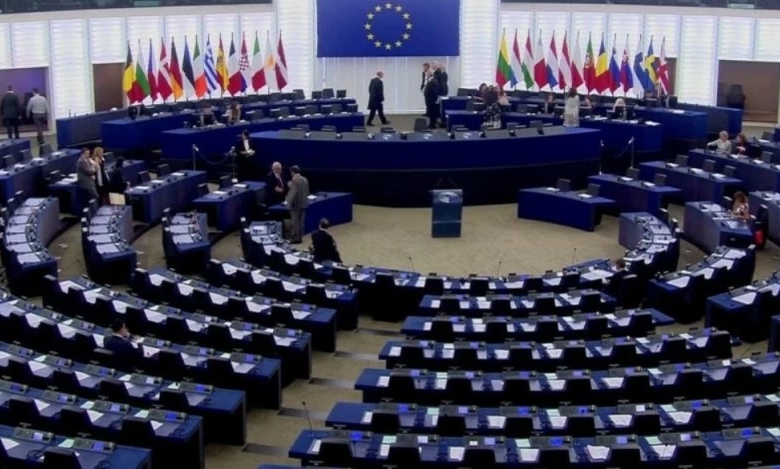
The European Parliament's International Trade Committee has urgently called for an emergency meeting next Monday to conduct a comprehensive reassessment of the existing trade agreement between the European Union and the United States. This crucial move comes in response to recent legal developments in Washington, following the US Supreme Court's decision on Friday to overturn most of the global tariffs imposed by former US President Donald Trump.
Background to trade tensions and the impact of protectionist policies
To understand the significance of this emergency meeting, one must consider the historical context of transatlantic trade relations over the past few years. The preceding period was characterized by the adoption of "America First" policies by the US administration, leading to a series of punitive tariffs targeting vital sectors such as steel, aluminum, and automobiles. This negatively impacted European economies and ignited what became known in the media as the "trade war." The recent Supreme Court decision represents a pivotal turning point that could reshape the global economic landscape and mitigate the inflation resulting from high import costs.
The Greenland crisis and the freezing of the diplomatic process
In a related development, sources revealed that the European Parliament's trade committee was scheduled to vote on Tuesday to proceed with ratifying the trade agreement with Washington. However, this diplomatic process encountered unexpected political obstacles, as the committee decided to postpone the vote due to political tensions sparked by President Trump's threat to purchase Greenland. This proposal, which was met with staunch European rejection and deemed an infringement on sovereignty, cast a dark shadow over the economic negotiations, highlighting the intertwining of political issues and economic interests in international relations.
Legal dimensions and the British position
Commenting on the legal developments, Bernd Lange, chairman of the Trade Committee, stated that the US Supreme Court ruling was not surprising to legal observers, stressing that the legal basis on which the US administration relied to impose those tariffs – which were described as unjustified – was weak and unsound from a constitutional and international trade perspective.
On another front, specifically concerning the United Kingdom, British government forecasts indicate that the preferential trade status with the United States will continue. This optimism is based on the terms of the recent trade agreement between the two countries, which guarantees the UK a significant competitive advantage by capping reciprocal tariffs at 10%, the lowest rate globally. This strengthens the stability of trade between London and Washington, independent of European-American tensions.