Only 27% of family businesses implement women's participation policies

Recent economic data has revealed a significant regulatory gap within the family business sector in Saudi Arabia. Statistics show that only 27% of family businesses have clear, written policies to facilitate the participation of female owners in administrative and supervisory structures. This indicator highlights the governance challenges facing this vital sector, despite the rapid legislative and economic transformations taking place in the Kingdom as part of Vision 2030, which aims to empower women.
The economic context and the importance of family businesses
This statistic is of paramount importance given the economic weight of family businesses in the Kingdom and the region. Historically, these entities have formed the backbone of the non-oil economy, with economic estimates indicating that family businesses contribute a significant percentage to the GDP and employ a large segment of the private sector workforce. As wealth is transferred across generations, the issue of women's participation emerges as a crucial element in ensuring the sustainability and development of these companies, rather than their remaining hostage to traditional, individual management.
Study details and the Women's Council
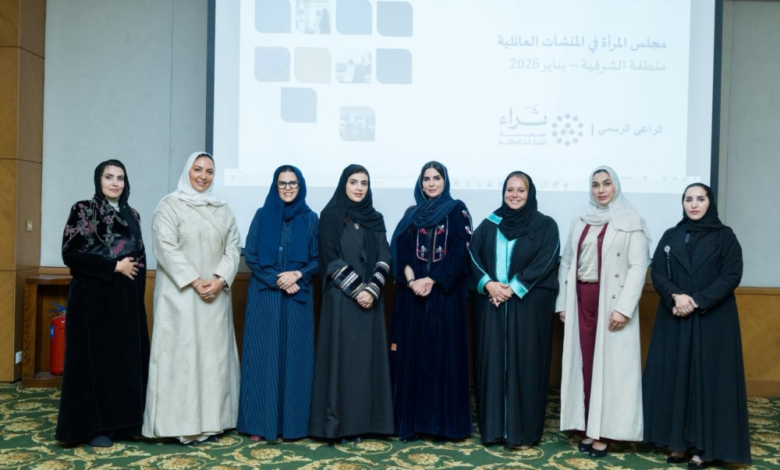
The announcement of these figures came during the "Women in Family Businesses Council" meeting, organized by the National Center for Family Businesses in strategic partnership with the Eastern Province Family Business Association "Tharaa". The event, held under the patronage of Her Royal Highness Princess Abeer bint Faisal bin Turki, Chair of the Board of Trustees of the Eastern Province Council for Social Responsibility "Absar", was titled "Investment, Finance, and Strategic Decision-Making" and was attended by a select group of experts in the fields of governance and investment.
The discussions emphasized that empowering women in this sector is no longer a mere supplementary option or an organizational luxury, but rather an urgent necessity for the sustainability of family-owned businesses. The council discussed the challenges hindering women's transition from the role of "silent owners" to that of "decision-makers" who influence strategic direction.
The gap between ownership and management
The study revealed a clear discrepancy between legal rights and organizational reality. While Islamic law guarantees women their full rights to inheritance and ownership, making them full partners in capital, the practical implementation of this right within boardrooms remains below expectations. The data indicates:
- Less than a third of establishments have declared policies to activate the role of women.
- A large percentage apply policies only partially or randomly.
- Nearly half of the establishments completely lack any regulatory framework that defines the role of women.
This absence of institutional organization makes women’s participation subject to personal interpretations and family relationships, rather than being an institutional right guaranteed within the “family charter,” which may open the door in the future to disputes that may threaten the stability of the company when power is transferred between generations.
Diverse roles and positive impact
The CEO of the National Center for Family Businesses, Dr. Aaidh Al-Mubarak, and the council's speakers emphasized that empowerment does not necessarily mean confining women to daily executive roles. Rather, it extends to include:
- Supervisory role: through membership in boards of directors and their subcommittees, to promote transparency.
- Investment decision-making: Participating in the development of long-term financial strategies.
The reports highlighted that the presence of women in leadership positions adds qualitative dimensions to performance, as female leaders often tend to adopt a more balanced approach to risk management, and they possess emotional intelligence that contributes to bridging differences and resolving family disputes, in addition to their deep understanding of consumer market trends and societal needs.
A promising future in light of national transformations
These calls for regulating the governance of family businesses coincide with an unprecedented surge in Saudi women's participation in the business sector. Data from the Ministry of Commerce indicates that women are acquiring an increasing percentage of new commercial registrations, with their strong entry into key sectors such as industry, construction, and technology. This trend confirms that the Kingdom's economic environment is now more conducive than ever to integrating women as active partners and influential leaders, provided that family businesses keep pace with this development by updating their internal systems and governance policies.