Service for completing the rituals in the Haram: 12 free carts to serve pilgrims

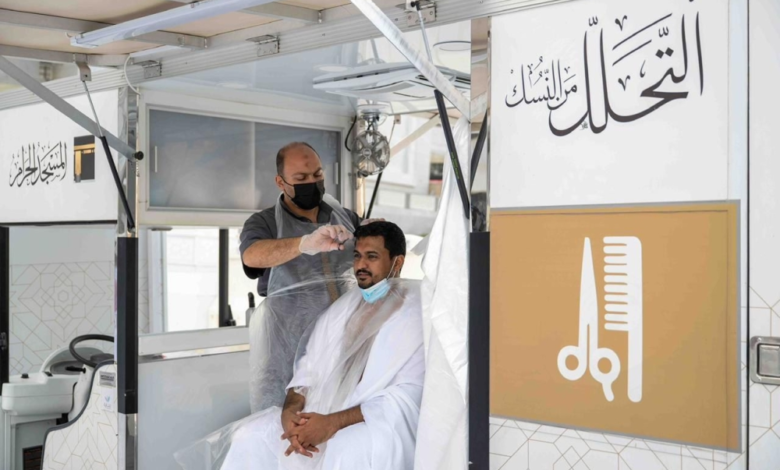
As part of intensive preparations for the holy month of Ramadan 1447 AH, and in line with expectations of millions of pilgrims and worshippers flocking to the Grand Mosque in Mecca, the General Authority for the Affairs of the Two Holy Mosques announced the raising of operational readiness for the "Hajj and Umrah Release" service. This step comes as part of an integrated system of services aimed at facilitating the experience for pilgrims. The Authority aims to provide this free service to approximately 360,000 beneficiaries during the holy month, reflecting the Kingdom of Saudi Arabia's commitment to dedicating all its resources to serving those visiting the Two Holy Mosques.
The importance of the service and its religious and organizational dimensions
The ritual of completing the Umrah pilgrimage (shaving or trimming the hair) has always presented an organizational challenge, especially during peak times. This innovative initiative aims to streamline this ritual within the courtyards of the Grand Mosque in Mecca, eliminating negative practices such as haphazard shaving and ensuring the smooth flow of crowds. These efforts align with the goals of Saudi Vision 2030 to enrich the pilgrims' experience, facilitate their spiritual journey, and guarantee they can perform their rituals in a safe and healthy environment, thereby enhancing the quality of services provided in the Holy City.
Strategic distribution and doubling of capacity
The operational plan for the Ramadan season revealed an expansion of the service fleet to 12 modern, fully equipped vehicles. Ten of these vehicles are designated for men and two for women, ensuring privacy and comfort. The strategic placement of these vehicles in high-traffic areas, specifically in the Bab al-Marwa area and the eastern courtyard adjacent to the al-Qashashiyah restrooms, aims to provide quick and easy access for pilgrims immediately after completing the Sa'i (ritual walking between Safa and Marwa). This eliminates the need for them to search for and move around outside the central area and helps alleviate pressure on the areas surrounding the Grand Mosque.
Standard standards in speed and sterilization
The free service for performing the ritual purification ritual (tahal) is characterized by high operational efficiency, keeping pace with the peak season. Data indicates that the average waiting time for a pilgrim does not exceed four minutes, while the purification process itself is completed in just two minutes. This efficiency extends beyond speed; the authority prioritizes health by implementing strict preventative protocols. These measures include the use of single-use tools and the regular and continuous sanitization of seats, equipment, and service areas to ensure the highest standards of public safety and prevent the transmission of infection among beneficiaries.
Performance indicators reflect the scale of achievement
In numerical terms that reflect the scale of the efforts exerted, the total number of beneficiaries of this service has exceeded one million since its launch, with a monthly average of approximately 210,000 pilgrims and a daily average of 7,000 beneficiaries. To accommodate the anticipated surge in traffic during Ramadan, the number of operational vehicles has been increased from 8 on regular days to 12, demonstrating the flexibility of the operational plans and their ability to adapt to changing circumstances in order to serve the pilgrims to the fullest extent.