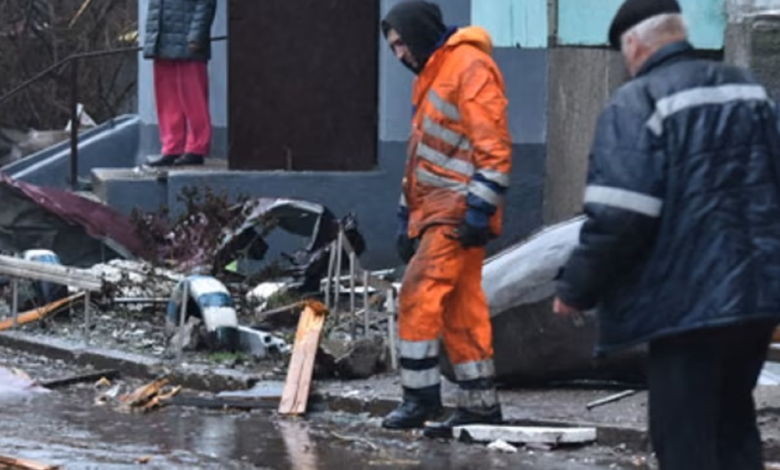
In a new escalation of the war targeting vital infrastructure, a Ukrainian minister announced on Thursday that more than one million families in the Dnipropetrovsk region of central Ukraine are facing dire conditions, deprived of water, electricity, and heating amid plummeting temperatures. This severe deterioration in basic services follows a series of intense Russian nighttime airstrikes that directly targeted power grids and distribution stations.
Details of the attack and damage to the electrical grid
Ukraine's national energy company, Ukrenergo, reported that energy infrastructure in the southern regions of Dnipropetrovsk and Zaporizhzhia was subjected to a night of intense bombing by Russian drones. This aerial attack caused extensive damage and widespread power outages, paralyzing daily life in these vital industrial areas.
In the context of crisis management, Deputy Prime Minister for Reconstruction of Ukraine, Oleksiy Kuleba, explained via social media that emergency teams are working around the clock, noting that “repair work is continuing in the Dnipropetrovsk region to restore heating and water services to more than one million subscribers.” Kuleba also highlighted a bright spot amidst the crisis, where technical teams managed to restore electricity in the Zaporizhzhia region, allowing for the resumption of heating and water services there.
Energy targeting strategy and harsh winter
These attacks are not isolated incidents, but rather part of a strategic approach adopted by Russian forces since their invasion of Ukraine in February 2022. This strategy relies on depleting Ukraine's resources by targeting the lifeblood of its economy and society: the energy sector. Moscow has consistently used a combination of cruise missiles and suicide drones to strike power generation and transmission stations, particularly as winter approaches.
The timing of these strikes carries serious implications, as Russia seeks to use “cold” as a pressure weapon. With temperatures dropping below zero, the interruption of heating and water becomes a direct threat to the health and safety of civilians, and increases the burdens on the Ukrainian government and its international partners who are seeking to secure the generators and spare parts needed for repairs.
Intensive efforts to restore services
For its part, the private energy company Detek confirmed that its engineers had managed to restore electricity to a portion of the vital infrastructure in Dnipropetrovsk, reiterating its full commitment: “We will do everything possible to restore power to homes.” Maintenance teams face enormous challenges, often having to work under the constant threat of shelling and in extremely difficult weather conditions.
The governor of Dnipropetrovsk, Vladislav Gayvanenko, had previously announced that a vital facility supplying electricity to much of the region had been severely damaged by the strikes, explaining the widespread power outages. This battle between Russian bombing and Ukrainian recovery efforts remains a defining feature of the current situation, amid international concerns that the humanitarian crisis will worsen as winter deepens.