German Chancellor: The days of the Iranian regime are numbered, and Trump is threatening

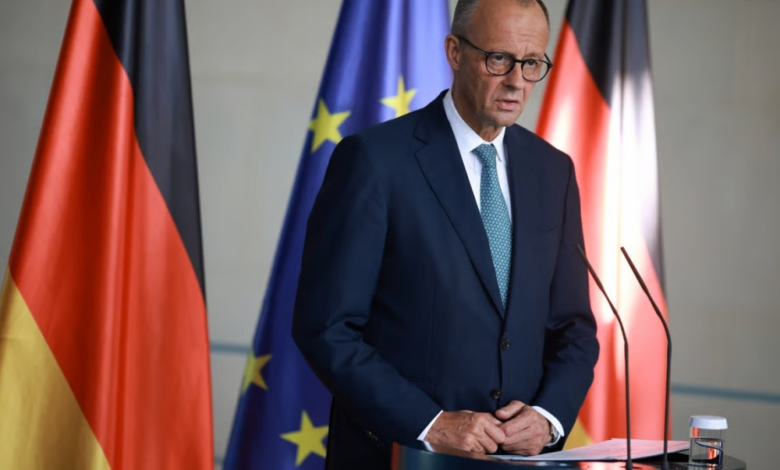
In a notable escalation of the European stance toward Tehran, German Chancellor Friedrich Merz stated that the days of the Iranian regime are numbered, indicating that a government based on violence cannot survive. These remarks came at a time of unprecedented international tension, coinciding with threats from US President Donald Trump of potential military intervention in the Islamic Republic.
Meretz: The regime lacks legitimacy
During a press conference held on Wednesday alongside Romanian Prime Minister Ilie Bologan, Merz launched a scathing attack on the Iranian leadership, stating, "A regime that can only remain in power through sheer violence and terror against its own people has its days numbered." The German Chancellor added firmly, "It may be a matter of weeks, but this regime has no legitimacy to rule," reflecting a radical shift in German diplomacy toward a more hardline stance against Tehran.
Context of tension and historical background
These statements come within a complex historical and political context, as the Iranian regime grapples with escalating internal and external crises. Domestically, Iran has witnessed widespread protests in recent years, most notably those sparked by the death of young activist Mahsa Amini, leading to an erosion of the regime's popular support and its increasing reliance on security measures. Externally, the nuclear agreement has reached an impasse, with Tehran continuing its uranium enrichment activities and expanding its regional influence through proxies, actions which Western nations consider a direct threat to international peace and security.
Chinese warnings and fears of sliding into war
Conversely, on the other side of the international equation, China warned of the consequences of any ill-considered military action. In a direct response to US President Donald Trump's escalation and military threats, Chinese Ambassador to the UN Fu Cong told the Security Council: “The use of force cannot solve problems, and any military adventure will only push the region toward the abyss of the unknown.” Beijing, which has strategic economic ties with Tehran, fears that any armed conflict could disrupt energy supplies and destabilize the global economy.
Expected regional and international repercussions
This escalation carries serious implications both regionally and internationally. Regionally, increased Western pressure and military threats could provoke retaliatory actions from Iran, jeopardizing the security of vital waterways in the Strait of Hormuz and placing neighboring countries on high alert. Internationally, the convergence of views between Berlin and Washington suggests the formation of a unified Western front seeking to completely isolate Tehran politically and economically, while Eastern powers such as China and Russia are attempting to maintain a balance and prevent the collapse of the Iranian regime, which could alter the geopolitical landscape of the Middle East.