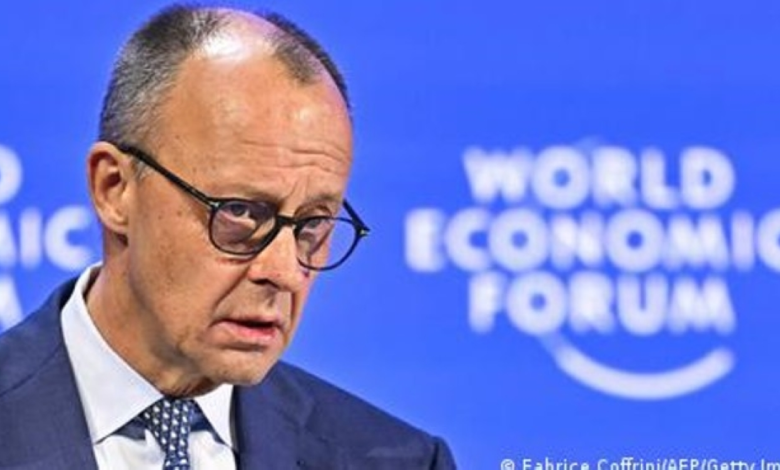

German Chancellor Friedrich Merz, speaking at the World Economic Forum in Davos, warned of the grave dangers facing the global order should it devolve into an arena governed solely by brute force. His remarks came at a time of profound geopolitical shifts, most notably Russia's ongoing invasion of Ukraine, China's growing influence, and radical changes in US foreign and security policy.
Warnings of a repeat of the tragedies of the 20th century
In his speech, Merz emphasized that a world governed solely by the logic of force is a perilous place, not only for small and medium-sized states, but even for the great powers themselves. The German Chancellor invoked his country's dark history as a lesson for the world, noting that Germany had followed this path in the 20th century, leading it and the world to a "bitter end and a dark abyss." This reference carries profound implications, alluding to periods when states abandoned diplomacy and international law in favor of military expansion, resulting in devastating world wars.
International context and challenges of the global order
These remarks come amid growing European concerns about the erosion of the "rules-based international order" that prevailed after World War II. With the rise of new powers and challenges to traditional ones, Europe faces a security and economic dilemma. Observers believe Merz's comments reflect German anxieties about a return to axes and military blocs that could marginalize international institutions and make the global economy hostage to political tensions.
The future of transatlantic relations
In a related development, German Vice Chancellor and Finance Minister Lars Klingbeil highlighted the cracks in US-European relations. Speaking at the German Institute for Economic Research (DIW) in Berlin, Klingbeil warned that the historic alliance with the United States is "on the verge of unraveling," noting that Europe is going through a critical period in which existential questions are being raised about its strategic foundations.
Impact of new US policies
Klingbeil pointed out that the geopolitical tensions stirred up by President Donald Trump, and his policies that are reshaping America's role in the world, are putting the transatlantic alliance to an unprecedented test. He explained that the transformation this alliance is undergoing is "far deeper than we have been willing to admit until now." This transformation compels European countries, especially Germany, to rethink their defense and economic strategies to reduce their total dependence on the American security umbrella and work towards European strategic autonomy that will guarantee the stability of the continent in the face of impending political storms.