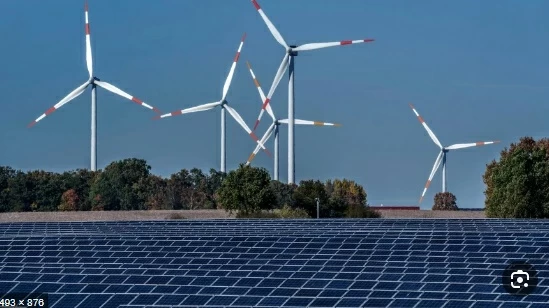

Renewable energy in Germany faces increasing structural challenges, with wind and solar power producers forced to temporarily shut down their facilities last year due to severe grid bottlenecks. This forced shutdown resulted in substantial compensation payouts of approximately €435 million, highlighting the gap between the rapid development of clean energy and the slow pace of infrastructure development needed to transmit it.
General context and historical background of the energy transition
Germany is a world leader in adopting energy transition policies, having invested hundreds of billions in shifting from fossil fuels and nuclear power to renewable sources. With the closure of its last nuclear power plant in 2023, reliance has increased significantly on wind power, concentrated mainly in the north of the country, and solar power, which is spreading in the south. However, persistent delays in building major transmission lines (such as the Suedlink project) to carry electricity from the windy north to the industrial south have created a real crisis of power generation exceeding the grid's capacity.
Details of compensation and network bottlenecks
Despite the substantial compensation payout (€435 million), the German Ministry of Economics clarified in its response to a parliamentary inquiry from Left Party MP Dietmar Bartsch that this figure represents a decrease of approximately €120 million compared to previous periods, reflecting a continuous decline over the years. These bottlenecks occur particularly on days with strong winds, prompting network operators to reduce production regionally to prevent grid collapse. The compensation amount depends on weather conditions, the state of the grid, and the precise market price at the time of the outage. The high compensation payout in Bavaria (southern Germany) is attributed to the high density of solar power installations compared to the significant slowdown in grid expansion.
Local and regional impact: System failure and consumer prices
At the local level, MP Dietmar Bartsch described the situation as a "systemic failure," demanding immediate action from the Minister of Economic Affairs. He asserted that the German government bears responsibility for the country having the highest electricity prices in Europe, while energy produced is wasted and compensation is paid for electricity that is not used. These absurd costs, he argued, are ultimately borne by the end consumer through electricity bills, burdening both citizens and industrial businesses.
Importance and future solutions
Regionally and internationally, neighboring European countries are closely monitoring the German experience, as bottlenecks in the German grid sometimes affect the stability of the unified European grid. To overcome this crisis, Bartsch and many experts have called for a fresh start based on accelerating the expansion of electricity transmission networks and investing in energy storage technologies (such as giant batteries and green hydrogen), rather than relying on limited fixes and insufficient measures. The primary goal should be to feed every kilowatt-hour produced into the grid to reduce prices and enhance energy security.