
Introduction: Gold in the face of market volatility
Despite the sharp decline that officially pushed gold prices into bear market territory, a significant number of financial analysts and strategists maintain their positive long-term outlook. These forecasts suggest that the price of the precious metal is poised to reach unprecedented record highs in the near future, overcoming the current setbacks which experts view as merely a temporary correction and an opportunity for repositioning.
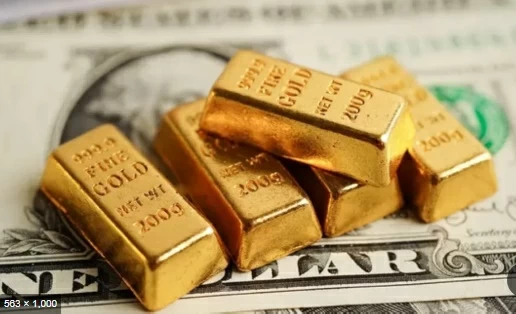
In recent trading, gold continued its decline, with the spot price falling by as much as 2% before recovering some of those losses to settle down about 1.5% at $4,335.97 per ounce. Gold futures also fell by about 2% to $4,317.80. The declines weren't limited to gold; silver also experienced losses. According to CNBC reports reviewed by Al Arabiya Business, the yellow metal is now down about 21% from its record high of $5,594.82 reached in late January, officially entering what is known economically as a "bear market.".
Historical context: Gold as a safe haven throughout the ages
Historically, gold has long been considered the foremost safe haven for investors during times of economic crisis and political turmoil. In periods of high inflation or war, capital flows to assets that preserve their purchasing power, a role gold played exceptionally well during the 2008 global financial crisis and the COVID-19 pandemic. The inverse relationship between gold and the US dollar, coupled with the influence of interest rates, makes the precious metal an indispensable strategic hedge in any balanced investment portfolio, which explains its continued appeal despite current price declines.
Short-term distortions or a radical change?
Many strategists believe the current decline in gold price expectations is merely a short-term market distortion and does not reflect any change in the metal's fundamental strengths. Ongoing geopolitical risks, particularly tensions in the Middle East, increased central bank gold purchases, and the potential for a weaker US dollar all strongly support gold's continued upward trajectory in the long term.
Expert predictions: Attractive entry points for investors
In this context, Ed Yardeni, president of a financial services firm, stated in a letter to CNBC: “We still see gold at $10,000 by the end of this decade.” Although he lowered his year-end forecast from $6,000 to $5,000 per ounce, this target level remains approximately 15% higher than current trading prices.
For his part, investment strategist Justin Lin indicated that he still expects gold to reach $6,000 an ounce by the end of the year, describing the recent decline as an “attractive entry point for investors.” Lin explained that the current sell-off appears to be driven by a combination of market sensitivity to rising interest rates, portfolio rebalancing amid weak equity performance, and a degree of complacency regarding the risks of continued conflict in Iran and the region.
Structural factors and the influence of central banks
Lin stressed that his bullish stance is not based solely on the “war risk premium,” but rather on a complex mix of persistent geopolitical uncertainty, strong demand from central banks, and large Asian investor flows into gold exchange-traded funds (ETFs).
In a related context, Rajat Bhattacharya, Chief Investment Strategist at Standard Chartered Bank, stated that his bank remains highly optimistic about the long-term future of gold. This optimism is attributed to strong structural factors, most notably increased demand from central banks in emerging markets seeking to reduce their reliance on the dollar and diversify their reserves, and the desire of institutional investors to protect their portfolios amid escalating global risks.
Bhattacharya predicted that gold would regain its positive momentum and rise towards the level of $5,375 per ounce during the next three months, once the current debt reduction phase in the markets is over, noting that there are strong and important technical support levels around the $4,100 barrier.