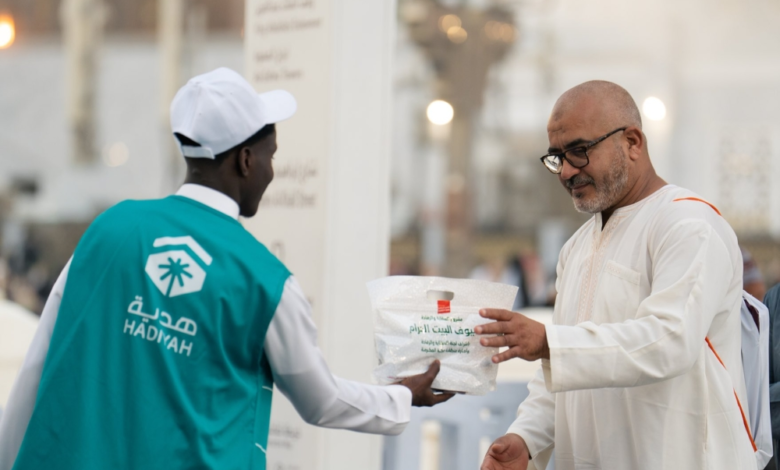
With the arrival of the holy month of Ramadan, the Hajj and Umrah Gift Association the launch of its ambitious seasonal operational plan for this year, which aims to distribute more than 1.5 million Iftar meals . This massive initiative comes as part of the association's noble mission to serve the pilgrims, with all human and logistical resources mobilized to ensure that the meals reach beneficiaries on time and to the highest quality standards.
A strategic distribution map that includes holy sites and entry points
The association's plan for this year focused on establishing a presence in the most vital and densely populated locations. The distribution map includes the courtyards of the Grand Mosque in Mecca, the Prophet's Mosque in Medina, and King Abdulaziz International Airport in Jeddah . Efforts were not limited to the holy cities alone, but extended to land border crossings and routes used by pilgrims and visitors, ensuring comprehensive coverage of the pilgrim's journey from their arrival in the Kingdom until the completion of their rituals.
A legacy of giving and serving the guests of God
This initiative builds upon a long history of institutional philanthropy in Saudi Arabia, where serving pilgrims is considered an honor and a historical responsibility passed down through generations. The efforts of “Hadiya” align with the goals of the Kingdom’s Vision 2030 and the Guests of God Service Program, which aims to enrich the religious and cultural experience of visitors. Providing 1.5 million meals is not merely a number; it embodies the values of Arab and Islamic generosity and hospitality, and reflects the significant progress in the management of charitable work and the non-profit sector in the Kingdom.
An integrated work system led by national talents
In a statement regarding the campaign, the CEO of the association, Engineer Turki Al-Hutairshi , affirmed that this year's operational plan was meticulously prepared to accommodate the anticipated increase in the number of Umrah pilgrims. Al-Hutairshi explained that the association took into account the expansion of distribution points and increased operational capacity, highlighting the pivotal role played by male and female volunteers in the field. He added that the work is carried out according to an integrated system that ensures food safety and smooth distribution, thus enhancing performance efficiency and achieving the desired community impact.
The social and voluntary impact of the initiative
The impact of the “Iftar for the Fasting” project extends beyond simply providing food; it also strengthens the values of social solidarity and the spirit of volunteerism within the community. Hundreds of young Saudi men and women participate in this project, dedicating their time and effort to serving those fasting, thus solidifying the culture of volunteer work as a cornerstone of community development. Through these efforts, the association seeks to present a model of organized humanitarian work, leaving a lasting positive impression on pilgrims and reflecting the bright image of the Kingdom and its people.