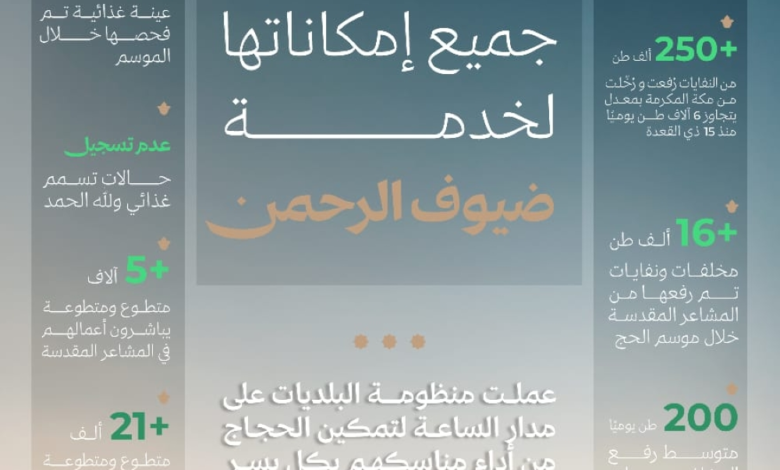

أعلنت وزارة الشؤون البلدية والقروية والإسكان، ممثلة في أمانة العاصمة المقدسة، عن نجاح خطتها التشغيلية المتكاملة لموسم حج عام 1445هـ. وقد تم تنفيذ هذه الخطة الطموحة عبر منظومة ميدانية متكاملة عملت على مدار الساعة لخدمة ضيوف الرحمن في مكة المكرمة والمشاعر المقدسة، مدعومة بكوادر بشرية تجاوزت 22 ألف فرد، وأكثر من 3 آلاف آلية ومعدة حديثة لضمان تقديم أرقى الخدمات البلدية.
سياق تاريخي وجهود متواصلة في خدمة الحجيج
تعتبر إدارة الحج وتنظيمه مسؤولية تاريخية عظيمة تضطلع بها المملكة العربية السعودية، حيث يمثل موسم الحج أكبر تجمع بشري سنوي في العالم. وعلى مر العقود، طورت المملكة منظومة خدمات متكاملة، مستثمرة في بنية تحتية ضخمة ومشاريع تطويرية مستمرة في المشاعر المقدسة لضمان سلامة الحجاج وراحتهم. وتأتي الخطة التشغيلية لوزارة الشؤون البلدية كل عام تتويجًا لهذه الجهود، حيث تركز على جوانب حيوية كالنظافة العامة، والإصحاح البيئي، والرقابة الصحية، وهي ركائز أساسية لنجاح الموسم ومنع أي طارئ قد يؤثر على تجربة الحجاج الروحانية.
إنجازات رقمية في النظافة والإصحاح البيئي
أوضح المتحدث الرسمي باسم الوزارة، محمد بن عبدالله الرصاصمة، أن الجهود الميدانية في مجال النظافة أسفرت عن نتائج مبهرة. فقد تم رفع أكثر من 250 ألف طن من النفايات في نطاق مكة المكرمة منذ منتصف شهر ذي القعدة، بمتوسط يومي تجاوز 6 آلاف طن. وفي منطقة المشاعر المقدسة، التي تشهد كثافة بشرية هائلة خلال أيام معدودة، تم رفع ما يزيد عن 16 ألف طن من المخلفات. وقد دُعمت هذه العمليات بمنظومة تشغيلية ضمت أكثر من 88 ألف وحدة نظافة، شملت الحاويات ومخازن الضغط الأرضية، لضمان التعامل الفوري والفعال مع النفايات والحفاظ على نظافة الأماكن المقدسة.
الرقابة الصحية وسلامة الغذاء: أولوية قصوى
وفي إطار الحرص على صحة وسلامة ضيوف الرحمن، كثفت الفرق المختصة جولاتها الرقابية على المنشآت الغذائية ومطابخ الإعاشة. وأشار الرصاصمة إلى تنفيذ أكثر من 3,000 زيارة رقابية في مكة والمشاعر، تم خلالها فحص ما يزيد عن 5,000 عينة غذائية عبر المختبرات الميدانية والثابتة للتأكد من مطابقتها للمواصفات الصحية. وبفضل هذه الإجراءات الوقائية الصارمة، لم يتم تسجيل أي حالات تسمم غذائي خلال موسم الحج، وهو ما يعكس مستوى الدقة والاحترافية في تطبيق معايير سلامة الغذاء.
الأثر الإيجابي وأهمية النجاح
إن نجاح الخطط التشغيلية لموسم الحج لا يقتصر أثره على توفير بيئة آمنة وصحية للحجاج فحسب، بل يرسخ أيضًا من مكانة المملكة على الصعيدين الإقليمي والدولي كدولة رائدة في إدارة الحشود والتجمعات البشرية الضخمة. كما يساهم هذا النجاح في تحقيق مستهدفات رؤية السعودية 2030، التي تهدف إلى تحسين تجربة الحج والعمرة. وقد شهد الموسم مشاركة فاعلة من أكثر من 12 ألف متطوع ومتطوعة أسهموا في دعم الخدمات الميدانية والتنظيمية، مما يعكس روح التكاتف المجتمعي لخدمة ضيوف الرحمن.