Al-Qadisiyah and Al-Thaqbah reach the futsal semi-finals, and Quran memorizers are crowned

continued of Al-Qadisiyah Ramadan season its distinctive activities in the city of Al-Khobar, where the competitions of the “Zoho” Futsal Championship witnessed great excitement that resulted in determining the first qualifiers for the Golden Square, in conjunction with cultural and social activities that reflect the pioneering role of the club in the Eastern Province.
Al-Qadisiyah and Al-Thaqbah qualify, and Arab matches are anticipated
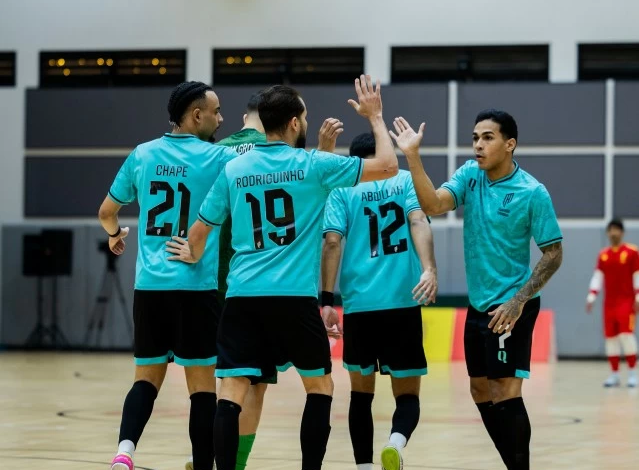
Al-Qadisiyah (the host team) secured the first ticket to the semi-finals after a marathon match that kept fans on the edge of their seats, defeating Al-Qurayyan 5-4. The match was characterized by its high level of competition and the fluctuating score until the final moments, reflecting the advanced technical level of the tournament.
In the same vein, Al-Thaqbah team proved their worthiness of qualification after achieving a well-deserved and clean victory over the Moroccan team, Saqr Agadir, by two goals to nil. This diversity in the participating teams, with representatives from Morocco, Libya, and Kuwait, confirms the regional importance of the tournament, which has become a prominent Ramadan sporting destination in the Gulf and the Arab world, attracting teams of high caliber.
All eyes are on Thursday as the quarter-final matches continue, with Libya’s Al-Suwaihli facing the Media team in a match that cannot be decided by two, while Ghadran will clash with Kuwait’s Naft, in a match that embodies the brotherly Gulf rivalry.
Social responsibility: Honoring Quran memorizers
On the cultural and spiritual front, Al-Qadisiyah Club celebrated the crowning of the winners in its Quran memorization and recitation competition. This year's edition witnessed a notable development with the addition of a "recitation" track, thus broadening community participation. Khalifa Al-Dakhil, Executive Director of the Quran Memorization Society in the Eastern Province, praised the strategic partnership with the club, emphasizing that Al-Qadisiyah sets a commendable example for sports clubs in activating social responsibility, with the direct support of the club's president, Bader Al-Ruziza.
Folk heritage and family atmosphere
The season also included a cultural and entertainment component, launching a traditional cooking competition supervised by expert chefs. The competition featured both homemade dishes and live cooking demonstrations, promoting Ramadan's culinary heritage. The club is also preparing to celebrate "Gargee'an" on Friday night under the slogan "Your Ramadan is with Us," a deeply rooted tradition in the Gulf region aimed at bringing joy to children and families.
This comprehensive movement of Al-Qadisiyah Club represents the embodiment of the concept of “quality of life,” as the club transforms from a mere sports facility into a center of cultural and civilizational influence serving all segments of society during the holy month.