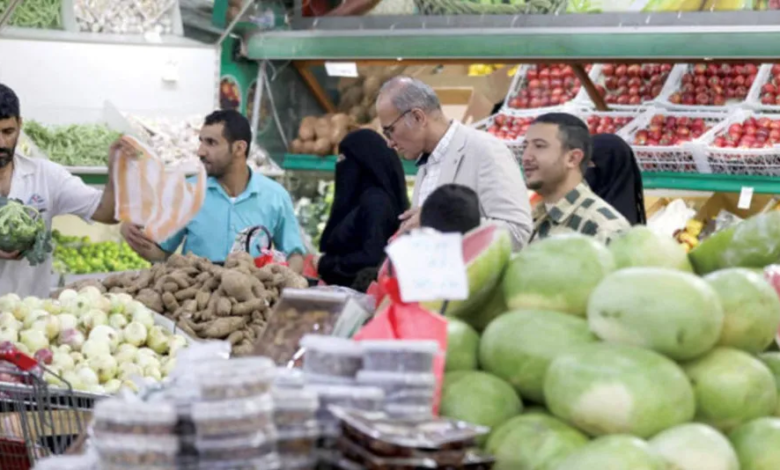
The agricultural sector in Yemen, the backbone of the national economy and the source of income for the vast majority of the population, faces unprecedented existential challenges as a result of the arbitrary practices imposed by the Houthi group. Fertile lands that were once the breadbasket of Yemen have become a burden on farmers, foreshadowing widespread economic recession and threatening the food security of millions of citizens.
Tax collection policies and creating crises
The most prominent of these practices is the imposition of an endless series of illegal levies and fees under various pretexts, such as "war effort" and "khums" (one-fifth tax), in addition to newly introduced taxes on agricultural produce transported between provinces. These levies have not only led to an exorbitant rise in agricultural product prices in local markets, but have also caused farmers significant losses, forcing many to abandon their land or reduce their cultivated areas because they cannot cover production costs.
Furthermore, the monopoly on petroleum derivatives and the black market for fuel play a destructive role in this context. Farmers rely entirely on fuel to operate irrigation pumps and transport goods, and with diesel prices soaring to record levels due to Houthi policies, the cost of agricultural production has risen to a point where competition or even survival is virtually impossible, leading to the drying up and desertification of vast areas of farmland.
Historical background and importance of the sector
Historically, Yemen has been synonymous with agriculture since ancient times, earning the nicknames "Happy Yemen" and "Green Yemen" thanks to its advanced agricultural system and ancient dams. The agricultural sector is the largest employer in the country, supporting over 70% of the rural population for their livelihoods. Targeting this vital sector is not merely a temporary economic loss; it strikes at the very heart of Yemen's social and economic fabric, exacerbating unemployment and poverty rates.
The repercussions of the disaster and the future of food security
The continuation of these practices threatens to transform Yemen from a country with the potential for self-sufficiency in many crops into one entirely dependent on imports and foreign aid. Economic experts warn that the collapse of the agricultural economy will inevitably lead to famine, especially given UN reports classifying the humanitarian crisis in Yemen as the worst in the world. Protecting Yemeni farmers and ending arbitrary levies is no longer merely a human rights demand, but an absolute necessity to avert an imminent humanitarian and economic catastrophe.