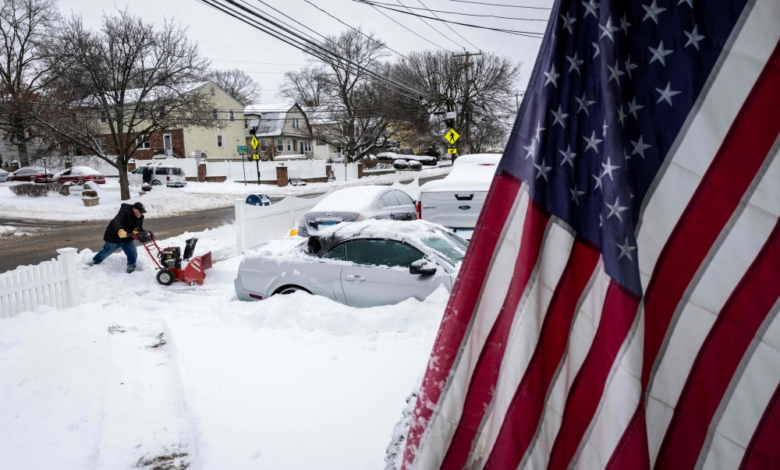

The death toll from the devastating winter storm that has battered the United States has risen to at least 35, in a weather event described by authorities as "historic" and one of the worst cold waves to hit the country in decades. This storm, dubbed the "deadly cold" by the media, has brought life to a near standstill in several states, leaving behind significant human and material losses.
Details of the air and land disaster
US media and official reports indicate that severe weather conditions, including high winds and heavy snow, have led to a series of horrific traffic accidents and skidding on highways that have turned into dangerous icy tracks. The reports state that a significant portion of the deaths resulted from road accidents, while others died from direct exposure to extremely low temperatures that caused freezing, or from heating failures and homes and vehicles being trapped by snow.
In a related context, the National Meteorological Authority and the relevant authorities renewed their strict warnings about the continued risks of frost, noting that the perceived temperatures have dropped to levels that could lead to frostbite within minutes in various parts of the country, calling on residents not to leave their homes except in cases of extreme necessity.
Paralysis in air and land transport
The storm's damage wasn't limited to roads; it also severely impacted the aviation sector. Air traffic at several major airports in Washington, Philadelphia, and New York came to a near standstill. According to FlightAware, a website specializing in flight tracking, more than 19,000 flights have been canceled since Saturday, while thousands more have been delayed, causing widespread travel disruptions and significant confusion during the holiday season.
The context of the storm and its historical impact
This winter storm is exceptional in both scope and intensity, with its effects stretching across vast areas of the United States. Meteorologists attribute this phenomenon to what is known as a "bomb cyclone," a sharp and rapid drop in atmospheric pressure that leads to powerful blizzards and gale-force winds. This weather pattern is accompanied by heavy ice accumulations that could have catastrophic consequences for infrastructure, including power and water networks.
Expected impacts and ongoing warnings
The effects of this polar wave are expected to persist for several more days, further straining emergency and rescue teams already struggling to reach affected areas. Authorities fear the death toll will rise as hundreds of thousands of homes and businesses remain without power amid sub-zero temperatures. These events underscore the importance of preparing for increasingly frequent extreme weather events, necessitating the modernization of emergency programs and infrastructure to withstand such harsh conditions in the future.