
Indonesian authorities announced on Monday that the death toll from the devastating landslide that struck West Bandung on the island of Java has risen to 17, while rescue teams race against time to find dozens missing under the rubble and mud. This disaster has once again highlighted the environmental and climatic challenges facing the country during the heavy rainy season.
Details of the disaster and rescue efforts
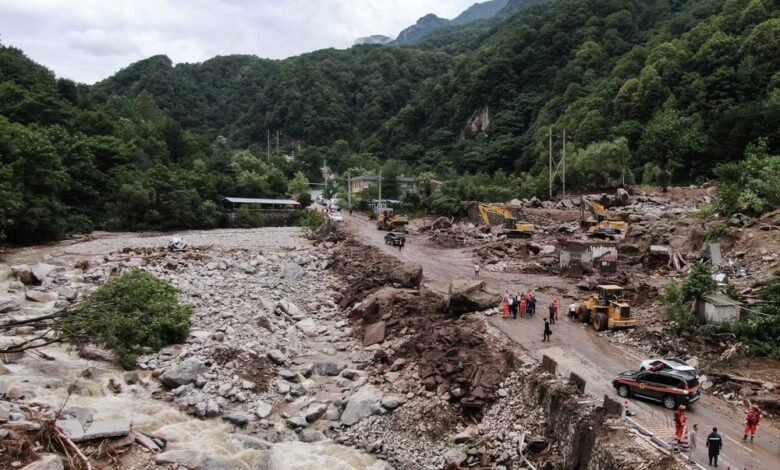
The National Disaster Management Agency (BNPB) reported in an official statement that the landslide occurred around 2:30 a.m. local time on Saturday, triggered by hours of torrential rain. The landslide buried homes in two villages located approximately 25 kilometers from Bandung, Indonesia's fourth-largest city. Adi Dian Permana, head of the local search and rescue unit, stated that the number of missing persons had been revised to around 46 based on accurate local reports, adding that rescue teams had recovered nine body bags for identification.
In a related development, the Indonesian military confirmed casualties among its ranks, with four marines among the confirmed dead and 19 others still missing. These soldiers were conducting field training exercises in the area in preparation for deployment to the border with Papua New Guinea, adding another tragic dimension to the incident.
Geographical and climatic context: Why do disasters recur?
Indonesia, a sprawling archipelago of thousands of islands, is one of the world's most disaster-prone countries. It lies within the Pacific Ring of Fire, a region of intense seismic and volcanic activity. Furthermore, the most populated island, Java, has volcanic slopes and soil that can become rapidly unstable when saturated with water.
During the rainy season, which typically lasts from October to March, the country experiences tropical depressions that bring torrential rainfall. These natural climatic conditions, combined with the mountainous terrain, make landslides a constant threat to remote villages and rural areas.
Environmental factors and the impact of deforestation
In addition to natural factors, experts and government reports increasingly point to the role of human activity in exacerbating these disasters. Deforestation for agricultural or urban expansion is a crucial factor in weakening soil cohesion. Vegetation plays a vital role in stabilizing the land and absorbing rainwater; without it, hills turn into easily sloping mudflats.
The Indonesian government has previously indicated that environmental degradation was a major cause of past floods and landslides, such as those that struck Sumatra late last year and resulted in heavy casualties, calling for a comprehensive review of land-use policies in at-risk areas.
Humanitarian repercussions and ongoing risks
The current disaster has severely damaged more than 50 homes, displacing over 650 people who are now seeking safe shelter. Approximately 2,000 personnel from the army, police, and volunteers are currently involved in the complex search operations, supported by heavy equipment, amid warnings of the potential for further landslides due to continued rainfall and unstable soil conditions at the site.