Iran announces the formation of a temporary leadership council after Khamenei's assassination

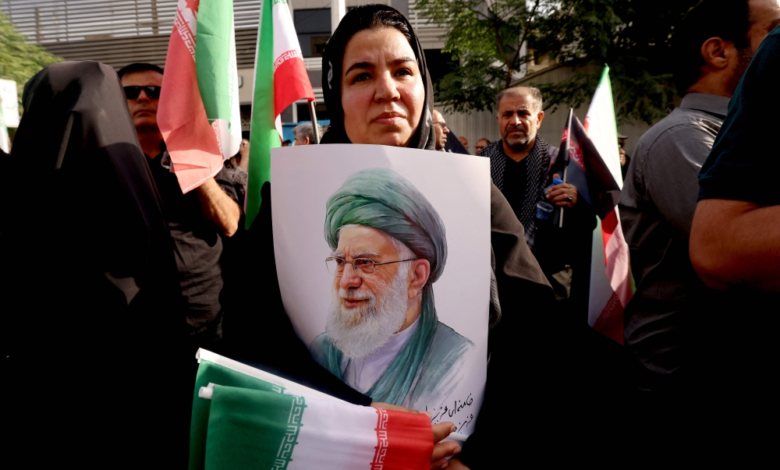
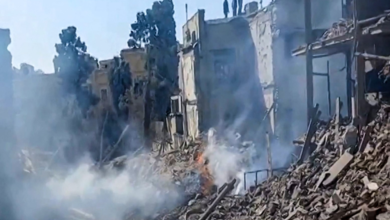
Ali Larijani, secretary of Iran's Supreme National Security Council, officially announced that the country has entered a critical transitional phase starting Sunday, following state television's confirmation of the death of Supreme Leader Ayatollah Ali Khamenei in a series of joint US-Israeli strikes targeting his residence. This announcement puts an end to speculation and opens the door to complex constitutional arrangements to fill the power vacuum at the highest levels of government in Tehran.
The mechanism for transferring power and the interim leadership council
In his urgent remarks, Larijani explained that a "temporary leadership council" would be formed as soon as possible to manage the country's affairs. According to Article 111 of the Iranian Constitution, this council would assume the duties of the Supreme Leader until a new one is elected. The council would consist of three main pillars: the president, the head of the judiciary, and a member of the Guardian Council. This step is a crucial constitutional measure to ensure the continued functioning of state institutions and prevent a constitutional vacuum that could lead to internal chaos.
Larijani confirmed that work is proceeding rapidly to form this council immediately, noting that Iran's security and political establishment is working in full coordination to overcome this crisis. Attention is now focused on the Assembly of Experts, the body constitutionally mandated to choose Khamenei's successor. It is expected to hold emergency closed-door sessions to discuss potential candidates for the position of Supreme Leader, a process that could be lengthy given the competing political factions within the regime.
International reactions and historical context
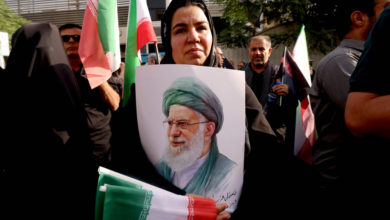
Internationally, former US President Donald Trump was quick to comment via his Truth Social platform, declaring Khamenei's death "justice" for the Iranian people and for American and international victims, in a clear escalation of political rhetoric against Tehran. These developments come at a time of unprecedented tensions in the region, with observers believing that the absence of Khamenei, who ruled the country with an iron fist since the death of its founder, Ruhollah Khomeini, in 1989, will constitute a geopolitical earthquake that could redraw the balance of power in the Middle East.
The departure of Khamenei is not merely a change at the top of the power structure; it marks the end of an era spanning more than three decades, characterized by expanding Iranian regional influence and ongoing confrontation with the West. With reports of the deaths of members of the Supreme Leader's family, including his daughter, her husband, and his granddaughter, uncertainty deepens regarding Iran's immediate future and whether the interim leadership will be able to maintain domestic unity under these turbulent circumstances.