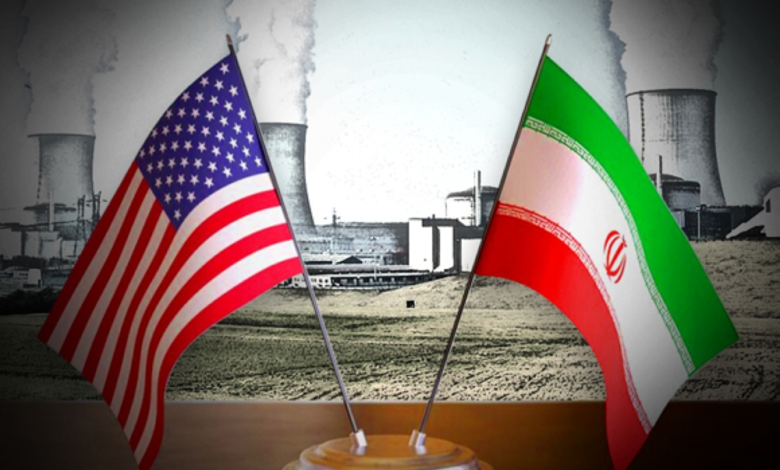
Iran: We will not stop uranium enrichment even if it means war – details of the talks

In a new escalation of Iran's stance on the nuclear negotiations, Iranian Foreign Minister Abbas Araqchi announced his country's firm position, asserting that Tehran would not relinquish its right to uranium enrichment under any circumstances, even if it meant facing war. These fiery statements came after a round of indirect talks with the United States hosted by the Omani capital, Muscat.
Firm messages from Muscat
Araghchi, who met with US envoy Steve Wittkopf in Muscat last Friday, explained that Iran's insistence stems from the principle of national sovereignty, saying, "Why do we insist so strongly on uranium enrichment and refuse to give it up even if war is imposed on us? Because no one has the right to dictate our actions." Speaking at a forum in Tehran, the minister noted that his country had paid a "heavy price" for many years to maintain its peaceful nuclear program and enrichment capabilities, referring to the harsh economic sanctions imposed on the country.
Context of the talks and the future of negotiations
Despite the hardline rhetoric, the Iranian side has not closed the door to diplomacy. Deputy Foreign Minister Abbas Araqchi confirmed that while no precise date has been set for the second round of talks with Washington, there is a preliminary agreement between the two sides on the need to hold them soon. These statements reveal Tehran's dual strategy, combining verbal escalation to strengthen its negotiating position with continued back-channel diplomacy, particularly through the Omani mediator, who has long played a pivotal role in bridging the gap between the two adversaries.
Historical background: The crisis of confidence and the nuclear agreement
To understand the depth of this statement, one must consider the historical background of the conflict. Since the United States unilaterally withdrew from the Joint Comprehensive Plan of Action (JCPOA) in 2018, Tehran has gradually reduced its nuclear commitments and increased uranium enrichment levels to near-military-grade levels, alarming the international community. Iran views enrichment as its only remaining leverage to pressure the West into lifting sanctions, while Washington and its allies consider this course of action a threat to international peace and security.
Strategic importance and regional influence
Iran's insistence on enrichment carries implications that extend beyond technical considerations; it represents a political message to the Iranian public and to regional and international powers that Tehran will not yield to maximum pressure. Regionally, these statements raise concerns among neighboring countries and exacerbate tensions in the Middle East, especially given the mutual threats exchanged between Iran and Israel. Internationally, this stance presents the US administration with difficult challenges in how to contain Iran's nuclear ambitions without sliding into open military confrontation, the repercussions of which could affect energy markets and the global economy.