The deadline for property registration in Riyadh and the Eastern Province ends today

The General Authority for Real Estate in Saudi Arabia announced that Thursday marks the deadline for the initial registration of properties in specific areas of Riyadh and the Eastern Province. This announcement is part of a comprehensive strategy aimed at regulating the real estate sector and protecting property owners' rights by converting ownership documents into accurate and verifiable digital data.
Details of the deadline and targeted areas
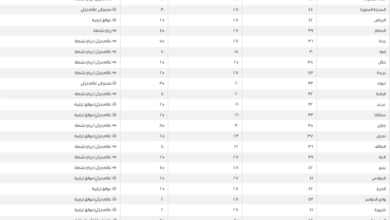
The authority clarified that the deadline, which ends today, applies to property owners in specific geographic areas, with a total of 214,166 properties targeted in this phase. These properties are distributed as follows: 56,446 properties in the Eastern Province, covering the governorates of Al-Ahsa, Al-Khafji, and Al-Nairiyah. The Riyadh region accounts for the largest share, with 157,720 properties distributed across the governorates of Al-Ghat, Al-Zulfi, Al-Majma'ah, Jalajil, Rawdat Sudair, Hawtat Sudair, Al-Kharj, and Al-Dilam, in addition to specific neighborhoods within the city of Riyadh.
The importance of the real estate registry and digital transformation
The Real Estate Registry project represents a qualitative leap in the history of real estate documentation in the Kingdom, shifting the system from "personal registration," which relies on the names of owners, to "property registration," which relies on the property itself as the basis for documentation. The importance of this transformation lies in enhancing transparency and reliability in the real estate market, aligning with the Kingdom's Vision 2030 goals of digitizing real estate assets.
Through the real estate registry platform, a unified property number and title deed are issued for each unit, including precise geospatial data that identifies the property's location, boundaries, and description, as well as its legal status and associated rights and obligations. This accurate documentation directly contributes to reducing real estate disputes and facilitates buying, selling, and investment processes, thereby increasing the attractiveness of the real estate sector for both local and international investors.
A call to owners and warnings of penalties
The General Authority for Real Estate reiterated its call to all property owners whose properties fall within the announced boundaries to promptly register via the electronic real estate registry platform rer.sa before the deadline. The Authority emphasized that registration allows beneficiaries to access real estate transaction processing services and to document any changes to the property immediately and securely.
In a related context, the Authority emphasized that failure to register within the announced period will subject property owners to financial penalties as stipulated in the Real Estate Registration Law. The value of these penalties will be determined by a specialized committee, thus requiring everyone to comply with the regulations to safeguard their rights and avoid legal and financial repercussions.