
In a new escalation of military rhetoric between Tehran and Washington, the commander of the Iranian army, Brigadier General Amir Hatami, issued strongly worded warnings to the United States and Israel, asserting that his country's nuclear capabilities could not be eliminated through military means. These statements came on Saturday amid heightened tensions and anticipation in the Persian Gulf region, following recent US military movements and the exchange of threats between the two sides.
Warning messages and maximum readiness
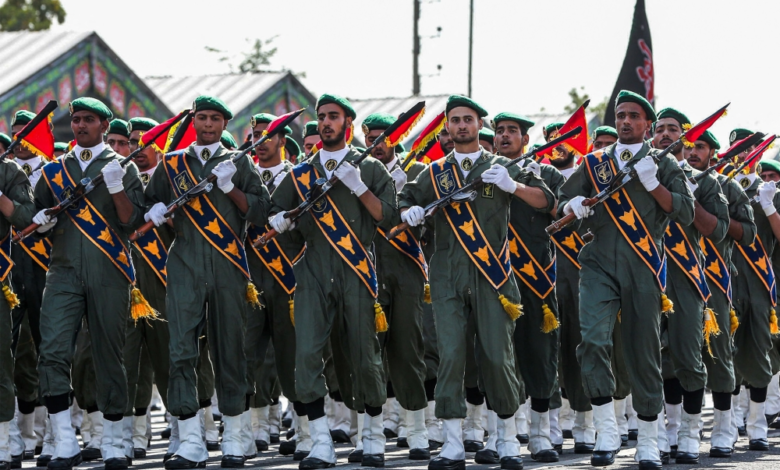
According to the official Iranian news agency IRNA, Hatami asserted that the Iranian armed forces are currently at their "highest level of defensive and military readiness," emphasizing that any miscalculation by the "enemy" would not only jeopardize Iran's security but would also ignite the entire region and directly threaten the security of the Zionist entity. These assertions come in response to speculations raised by US President Donald Trump regarding the possibility of Tehran seeking a new agreement under duress, a notion the Iranian military commander implicitly denied by stating that Iran's nuclear expertise is "national and deeply rooted" and cannot be seized by force.
Context of the tension: Post-withdrawal from the nuclear agreement
These statements cannot be separated from the broader context of the crisis that has escalated since Washington's unilateral withdrawal from the Joint Comprehensive Plan of Action (JCPOA) in 2018 and the reimposition of crippling economic sanctions as part of its "maximum pressure" campaign. This policy has prompted Tehran to gradually reduce its compliance with its nuclear commitments, further fueling Western and Israeli concerns about the development of Iran's nuclear program. Observers believe that Hatami's reference to "unerasable expertise" alludes to the indigenization of the nuclear fuel cycle and scientific research, implying that targeting physical facilities will not erase the technical knowledge acquired by Iranian scientists over decades.
Military mobilization and its regional repercussions
On the ground, the United States reinforced its military presence by deploying the aircraft carrier strike group USS Abraham Lincoln and strategic bombers to the Middle East, in a clear message of deterrence to Tehran. This intensified military buildup has raised international concerns about a potential direct confrontation that could have catastrophic consequences for the global economy, particularly regarding the security of energy supplies through the strategic Strait of Hormuz. In this regard, Tehran has repeatedly warned that it will retaliate with missile strikes targeting US bases and ships, as well as those of Washington's allies in the region, most notably Israel, should it be subjected to any aggression. This places the entire region on a knife's edge, awaiting the outcome of diplomatic efforts or the outbreak of a full-blown confrontation.