Rafah crossing to reopen on Sunday: Israeli conditions and details of the decision

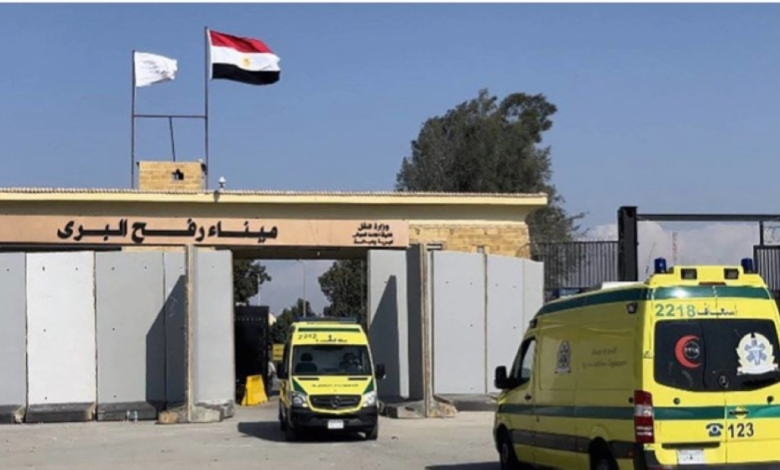
The Israeli occupation authorities have officially announced their decision to reopen the Rafah border crossing, the only gateway for the Gaza Strip to the outside world not fully controlled by Israel, starting next Sunday. This decision will allow the movement of people, but only within very limited parameters and under strict security measures, raising questions about the effectiveness of this step in alleviating the humanitarian suffering in the Gaza Strip.
According to statements issued by the Israeli government, the crossing process will be subject to a complex mechanism requiring direct coordination with the Egyptian side, in addition to the necessity of obtaining prior security clearance for each traveler. Notably, the announcement indicated that the crossing would operate "under the supervision of the European Union mission," a reference to the security arrangements in place years ago. The decision also specified the beneficiaries exclusively, with authorities clarifying that only residents who left the Gaza Strip during the war would be permitted to return, effectively maintaining restrictions on regular travel.
The strategic importance of the Rafah crossing
The Rafah crossing holds paramount strategic and humanitarian importance as the main lifeline for over two million Palestinians living in the Gaza Strip. Historically, it has been the only point of contact between Gaza and Egypt, and a conduit for people and humanitarian aid, bypassing crossings directly controlled by Israel, such as the Erez (Beit Hanoun) crossing. The discussion of EU oversight recalls the 2005 Agreement on Movement and Access, which stipulated the presence of European Union monitors (EUBAM) to ensure smooth operations and adherence to international standards. However, the mission effectively ceased operations after Hamas seized control of the Gaza Strip in 2007.
Humanitarian and political repercussions
From a humanitarian perspective, the closure or restriction of the crossing is a nightmare for the residents of the Gaza Strip. The resulting overcrowding on both sides leads to dire humanitarian crises, particularly for patients requiring treatment abroad, students, and those with critical humanitarian needs. While the current decision allows for the return of those who left during the war, it falls short of the urgent need for the crossing to be fully and permanently opened to ensure the free flow of goods and people.
Regionally and internationally, this announcement reflects the sensitivity of the diplomatic situation, as Egypt plays a pivotal role as a key mediator in the ceasefire and border management efforts, while Israel attempts to maintain its security grip by requiring prior approvals. Furthermore, the renewed involvement of the European Union in the crossing equation may indicate an international desire to find a monitoring mechanism that addresses Israel's security concerns while simultaneously granting international legitimacy to the operation. This could be a prelude to broader security and political arrangements concerning the future management of the Gaza Strip's borders.