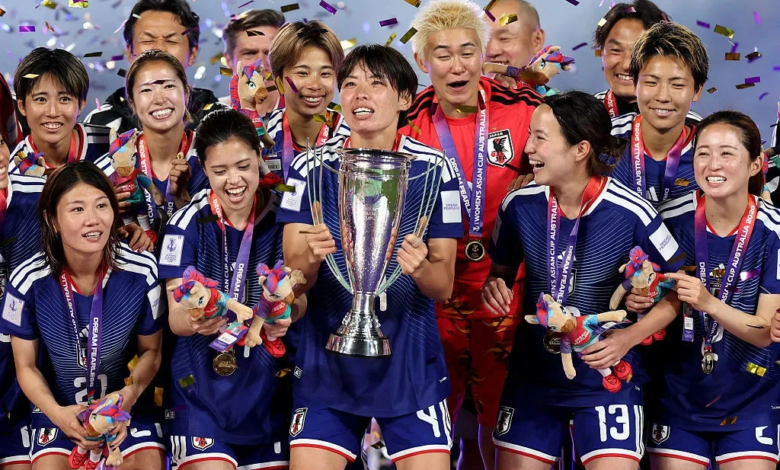

Historic triumph for Japan in the Women's Asian Cup
In an extraordinary night of football, the Japanese national team made history with a thrilling 1-0 victory over Australia in the final of the AFC Women's Asian Cup . The decisive match took place on Saturday in front of a record crowd of 74,357 at Stadium Australia, reflecting the growing popularity of women's football both regionally and internationally. With this win, Japan secured their third continental title in the last four editions, adding to their previous triumphs in 2014 and 2018, and leaving the host nation in bitter disappointment.
Historical context and the importance of confrontation
The matches between Japan and Australia are considered among the fiercest derbies in Asia. Japan, the 2011 Women's World Cup champions, boast a long history of technical and tactical dominance. Meanwhile, Australian football is enjoying its golden age with its "Golden Generation," which won the Asian Cup in 2010 and reached the later stages of recent international tournaments. This final was more than just a cup match; it was a battle to establish continental supremacy, especially with the unprecedented home support Australia enjoyed.
Match details: A decisive goal and a solid Japanese defense
The match began cautiously from both sides, but Japan quickly imposed their style. In the 17th minute, the talented Maika Hamano scored the only goal of the game in spectacular fashion. Hamano skillfully turned outside the penalty area and unleashed a powerful shot that beat Australian goalkeeper Mackenzie Arnold, who tried desperately to save it but to no avail. After the goal, Australia tried to recover, with striker Caitlin Foord having a golden opportunity in the 11th minute (before the goal) following a long pass, but her shot went straight to Japanese goalkeeper Ayaka Yamashita. Australian star Sam Kerr also struggled with tight marking that restricted her movement inside the penalty area.
Second half: Resilience from Japan and intense Australian pressure
In the second half, Japan faced a tough defensive test, especially in the final ten minutes, which saw a fierce attacking surge from the Australian players in search of an equalizer. Japanese goalkeeper Yamashita was outstanding, brilliantly saving a dangerous header from Alanna Kennedy after a perfect cross from Ellie Carpenter. The Japanese defense also stood firm against two shots from substitute Emily van Egmond. On the other end, the tournament's top scorer, Riko Ueki (with six goals), almost extended Japan's lead with two clear chances within three minutes, but she was unlucky not to convert.
Coaches' statements and reactions
Following the final whistle, Japan's coach, Nils Nielsen, expressed his immense pride in his players, saying, "The girls fought with everything they had, and I'm truly proud of them. It was difficult to reach our usual level, but they deserved the victory after achieving six consecutive wins." Meanwhile, Australia's coach, Joe Montemurro, lamented the missed opportunities, stating, "Japan scored a fantastic goal, and we didn't. It was a very even match, but Japan currently has an amazing team." In a related matter, Australian defender Steph Catley described the defeat as "the toughest of my career," emphasizing that the team gave their all and created numerous chances, but luck was not on their side.
The impact of the result on the football scene
This victory proved that the Japanese national team remains a dominant force in Asian women's football, thanks to its disciplined tactical system and ability to win big matches. Conversely, this loss is a bitter blow for Australia's golden generation, who had hoped to win a major title on home soil in front of their passionate fans. Nevertheless, the record attendance confirms that women's football in Australia and Asia is on an impressive upward trajectory, promising a bright future for the game in the region.