The Ramadan moon in its first quarter phase: Jeddah astronomical observation details

The Jeddah Astronomical Society, through its president, Engineer Majid Abu Zahra, announced a special astronomical event that will grace the skies of the Arab world, as the moon of the holy month of Ramadan will reach its first quarter phase on Tuesday, February 24, 2026. This event will be observed at 3:27 PM Mecca time, 7 days and 26 minutes after the moment of conjunction, which represents an important time milestone in the lunar calendar for this holy month.
Details of the astronomical phenomenon
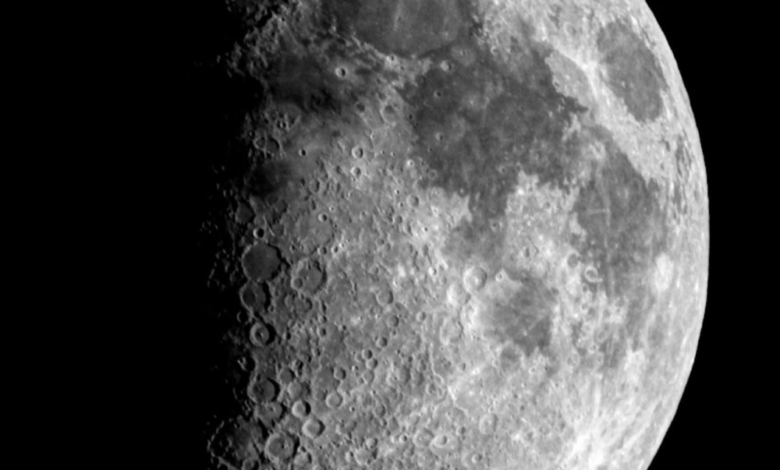
Engineer Abu Zahra explained that the moon reaching its first quarter phase means it has completed a quarter of its orbit around the Earth. This phenomenon occurs when the angle between the sun and the moon is approximately 90 degrees, resulting in half of the moon's disk being fully illuminated, while the other half remains in shadow. This phase is a clear and noticeable sign of the end of the first week of the lunar month, thus enhancing the accuracy of established astronomical calculations.
The importance of the event and its scientific context
Observing the phases of the moon holds particular significance in Islamic and Arab culture, as the beginnings of the lunar months and religious observances are linked to the moon's movement. From a scientific perspective, the first quarter phase is a golden period for astronomers and amateur astronomers alike, since the contrast between light and shadow on the moon's surface is at its peak. This contrast creates long shadows at the terminator, the line separating the illuminated and shadowed portions, thus highlighting the moon's topography with a three-dimensional clarity not available during a full moon.
Experts point out that the synodic lunar cycle, which extends from new moon to new moon, lasts an average of 29.5 days. Therefore, the timing of the first quarter aligns with the precise celestial mechanics that govern the movement of celestial bodies in our solar system, with slight variations depending on the Moon's changing speed in its elliptical orbit around Earth.
Best times and methods of monitoring
For those interested in astrophotography and observation, the Jeddah Astronomical Society confirmed that this phase is one of the most suitable for viewing. The moon will rise around noon, reach its highest point in the sky (azimuth) after sunset, and remain clearly visible until approximately midnight.
Astronomers recommend using binoculars or a small telescope with an aperture of 4 to 6 inches for the best viewing experience. With these instruments, lunar craters, mountains, and sea plains can be seen with exceptional clarity, especially along the terminator (the line between light and dark).
Towards the full moon
As the moon continues its orbit around the Earth in the coming days, the angular distance between it and the sun will increase, gradually expanding the illuminated portion of its disk. This glow will continue night after night until the moon reaches its full phase in the middle of the month, providing a series of excellent opportunities for astronomy enthusiasts to observe and document the moon's phases during the nights of the holy month of Ramadan.