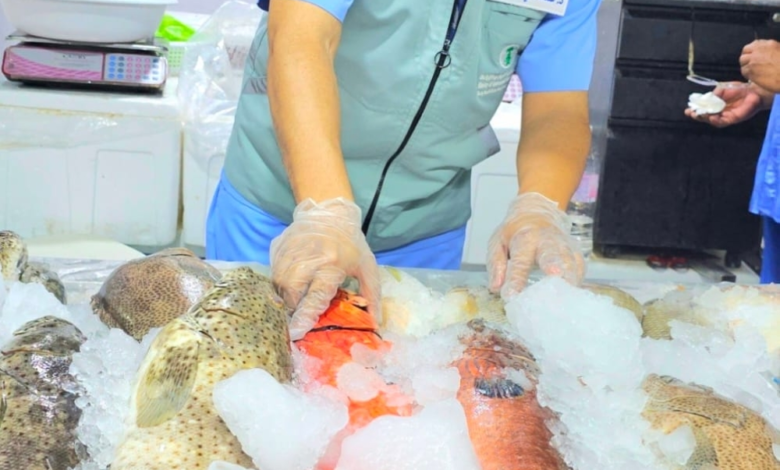

As part of ongoing efforts to enhance food security and ensure the safety of products offered to consumers, the Makkah Region branch of the Ministry of Environment, Water and Agriculture conducted an intensive inspection campaign targeting seafood markets and production facilities in Jeddah. This campaign resulted in the seizure of large quantities of fish unfit for consumption, reflecting the vigilance of the inspection teams and the Ministry's firm commitment to enforcing regulations.
Details of seizures and violations in Jeddah Central Market
Inspection teams from the Markets and Slaughterhouses Department seized and destroyed 1,110 kilograms (over a ton) of spoiled fish after tests confirmed it was unfit for human consumption. The inspections focused primarily on the central fish market, as well as storage facilities and vehicles used for transporting seafood.
During thorough inspections, teams identified 738 violations and issued warnings within the central market alone. The violations ranged from the sale of fish of unknown origin and poor transportation and storage practices to the tampering with product labeling, which constitutes commercial fraud and threatens consumer health.
The importance of health monitoring and its impact on society
These campaigns are of paramount importance given the perishability of seafood and its rapid spoilage if not stored according to strict health standards. Spoiled fish can be a source of serious food poisoning due to the accumulation of bacteria and histamine. These initiatives are part of the Ministry's strategy to achieve sustainable development in the food sector and ensure the availability of safe and healthy products on Saudi tables, thereby enhancing quality of life and reducing the healthcare costs associated with foodborne illnesses.
Statistics on oversight efforts and statements by officials
Engineer Waleed Al-Daghis, Director General of the Ministry's branch in the Makkah region, explained that these seizures are the result of diligent work, with the branch conducting 3,132 inspection visits covering 240 establishments in the past two months alone. Al-Daghis emphasized the continuation of both regular and surprise inspections to ensure compliance with regulations and bylaws.
For his part, Engineer Jamaan Al-Zahrani, Director of the Markets and Slaughterhouses Department, indicated that the total amount seized during the recent campaigns approached 10 tons of various seafood and vegetables. In a humanitarian gesture that reinforces the concept of social solidarity and reduces food waste, the seized products were sorted, and half a ton of food deemed fit and safe was donated to charitable organizations, while deterrent legal penalties were applied to the violators.