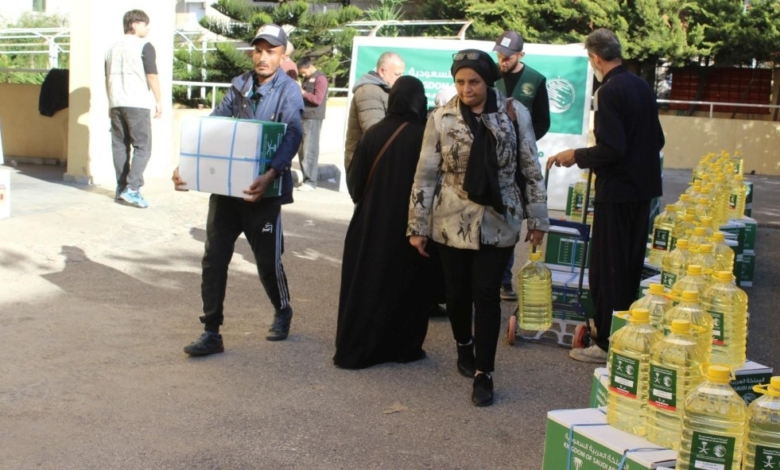

As part of the ongoing humanitarian efforts of the Kingdom of Saudi Arabia to support affected people around the world, the King Salman Center for Relief and Humanitarian Aid to implement its relief programs in the Lebanese Republic, where the town of Aramoun in the Mount Lebanon Governorate witnessed intensive relief activity targeting the most needy groups.
Details of food aid in Mount Lebanon
The center distributed 866 complete food baskets and 866 cartons of dates as part of its projects to support food security. This aid directly benefited 4,330 individuals, including Syrian refugees facing difficult living conditions and needy families within the Lebanese host community in the area. This initiative is part of a comprehensive plan to distribute food aid and dates across various regions of Lebanon.
The context of the economic crisis and the need for support
This aid is of paramount importance given the dire economic conditions in Lebanon, which the World Bank has classified as one of the world's most severe crises. High inflation and the devaluation of the local currency have made it extremely difficult for a large segment of the population to secure basic food supplies. The King Salman Humanitarian Aid and Relief Center's initiatives are working to bridge this food gap, easing the burden on families struggling to meet their daily needs and contributing to social stability in areas hosting large numbers of refugees.
The Kingdom's leading role in humanitarian work
This distribution is an integral part of the Kingdom of Saudi Arabia’s strategy, represented by its humanitarian arm, the King Salman Humanitarian Aid and Relief Center, to stand by the brotherly Lebanese people and the refugees residing within its borders. These efforts extend beyond the distribution of food baskets to encompass the health, shelter, and education sectors. These initiatives reflect the Kingdom’s unwavering commitment to humanitarian principles and its constant dedication to providing assistance to those in need without discrimination, thus solidifying its position as one of the largest donors of humanitarian aid at both the regional and international levels.