Pezeshkyan apologizes to neighboring countries and announces a halt to missile attacks

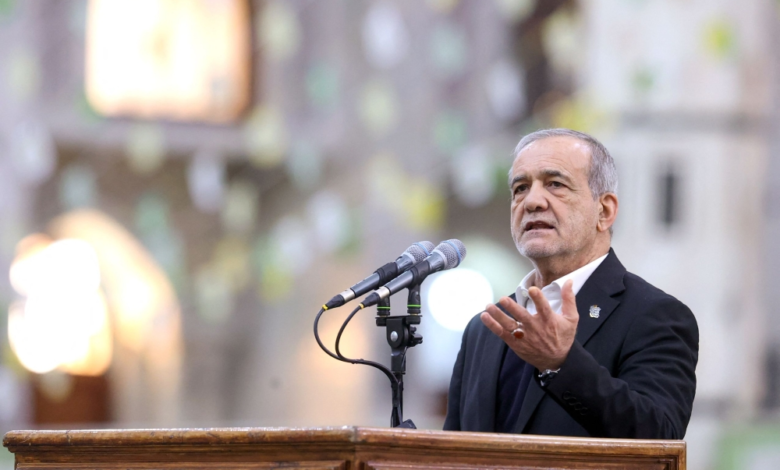
In a significant development in the region's political and military landscape, Iranian President Masoud Pezeshkian issued a formal apology to neighboring countries on Saturday during a televised address broadcast on state television. Pezeshkian confirmed that the "Interim Leadership Council" had made a decisive decision to halt all missile attacks or strikes against neighboring states, emphasizing that this decision would take effect immediately unless Iran was attacked from the territory of those countries.
Strategic shift and regional reassurance messages
This announcement comes as a move aimed at neutralizing the regional front under the current military circumstances. "I apologize to the neighboring countries," Pezeshkian said in his speech, adding unequivocally, "We have no enmity with them." Analysts suggest this statement reflects Tehran's desire to avoid expanding the conflict to include neighboring Arab states, and instead focus on direct confrontation with Western and Israeli forces, which are waging intensive attacks against the country.
The Iranian president explained that the new strategy requires not targeting neighboring Arab countries, provided that their territories are not used as launching pads for attacks against the Islamic Republic, which is considered a diplomatic message of reassurance aimed at reducing tension in Iran’s regional environment.
Major military escalation: The second week of the war
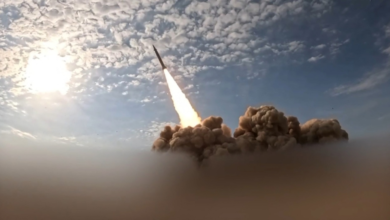
This conciliatory political stance towards neighboring countries coincides with the start of the second week of the US-Israeli war on Iran, which is witnessing an unprecedented military escalation. The Israeli occupation army, in coordination with the US Central Command, announced that it had launched intensive air and missile strikes targeting more than 400 sites inside Iranian territory last Friday.
According to military sources, the attacks focused on areas in western Iran, targeting ballistic missile launch sites and drone depots belonging to the Iranian regime. The attacking forces confirmed that they used a variety of precision munitions to ensure the destruction of Iranian military capabilities in those areas.
Civilian casualties and infrastructure
Despite Israeli and American assurances that the strikes targeted "exclusively" military objectives, official reports from Tehran indicate significant civilian casualties. The Iranian news agency Mehr quoted government spokesperson Fatemeh Mohajerani detailing the damage inflicted on civilian infrastructure.
Mohajerani explained that the week-long military campaign has targeted 390 residential units, in addition to damaging 528 commercial centers and 13 medical facilities. These figures highlight the heavy human and economic cost of the ongoing conflict and partially justify Iran's diplomatic efforts to contain the war and avoid opening additional fronts with neighboring countries that could be affected by the repercussions of this escalation.