Lowest temperatures in Saudi Arabia today: Tarif and Al Qurayyat record 3 degrees Celsius

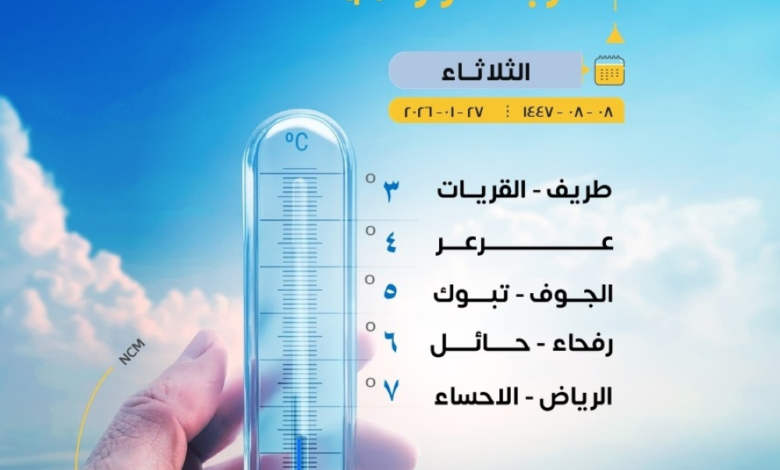
Several regions in Saudi Arabia experienced a significant drop in temperatures on Tuesday, with the governorates of Tarif and Qurayyat recording the coldest temperatures. According to data released by the National Center for Meteorology in its daily weather report, both Tarif and Qurayyat registered a low of 3 degrees Celsius, placing them among the areas most affected by the current cold wave.
List of the lowest temperatures recorded in the cities of the Kingdom
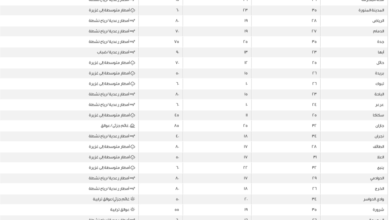
The National Center for Meteorology's report detailed the minimum temperatures recorded at dawn today, which varied between the northern and central cities, with the ranking as follows:
- Tarif: 3 degrees Celsius.
- Al Qurayyat: 3 degrees Celsius.
- Arar: 4 degrees Celsius.
- Al-Jawf: 5 degrees Celsius.
- Tabuk: 5 degrees Celsius.
- Rafha: 6 degrees Celsius.
- Hail: 6 degrees Celsius.
- Riyadh: 7 degrees Celsius.
- Al-Ahsa: 7 degrees Celsius.
The geographical and climatic context of the cold wave
The northern regions of the Kingdom, specifically Tarif, Qurayyat, and the Northern Borders, are the primary gateway for cold air masses arriving from the Northern Hemisphere and Europe. Historically, these areas are known for recording the lowest temperatures in Saudi Arabia during winter, with temperatures sometimes dropping below freezing, occasionally leading to frost or light snowfall. This current drop in temperature is consistent with typical climatic patterns at the height of winter, as the region is influenced by Siberian high-pressure systems that push cold, dry winds towards the Arabian Peninsula.
Expected effects and safety recommendations
With temperatures continuing to drop, especially during the late night and early morning hours, the daily lives of citizens and residents are directly impacted. The need for various heating methods increases in such weather, highlighting the importance of adhering to the guidelines issued by the Civil Defense and other relevant authorities to ensure the safe use of heaters, whether electric or those that rely on coal and wood, in order to prevent cases of suffocation or fires in enclosed spaces.
This weather also affects traffic on highways, particularly with the possibility of fog forming in the early morning hours or dust and sandstorms caused by active winds associated with certain air masses, necessitating caution while driving. Fluctuations in temperature are expected to continue over the coming days, requiring close monitoring of official weather forecasts to ensure appropriate winter clothing is worn and to avoid seasonal colds.