Dust storm activity in Saudi Arabia: 30 cases recorded and their expected effects

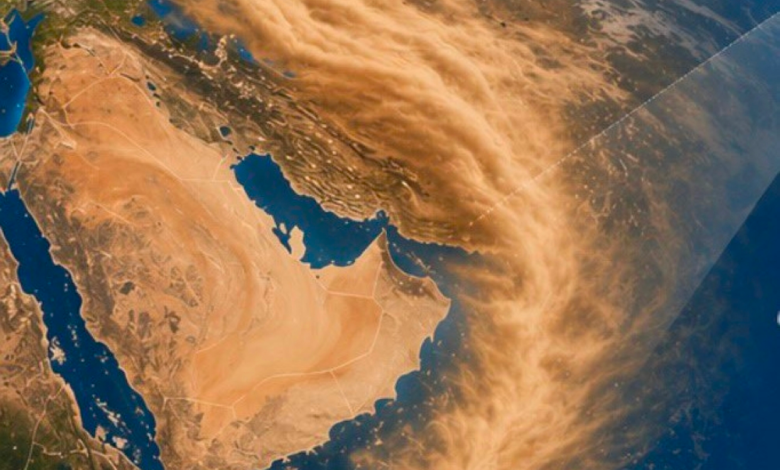
The Regional Center for Dust and Sandstorm Warning announced that it had detected 34 cases of dust activity in several countries in the region on Wednesday, April 29, 2026, with Saudi Arabia recording the largest share at 30 cases, which highlights once again the nature of the region’s climate and its susceptibility to these weather phenomena.
Background of the phenomenon: Why do dust storms occur so frequently in the Kingdom?
Dust and sandstorms are a common natural phenomenon in Saudi Arabia and the Arabian Peninsula in general. This is due to its geographical location within what is known as the "Arabian Dust Belt," which extends across North Africa and the Middle East. The Kingdom is characterized by vast desert areas, such as the Rub' al Khali and the Great Nafud, which are major sources of dust and sand. Other climatic factors contribute to exacerbating the phenomenon, such as low rainfall, high temperatures that lead to soil erosion, and active seasonal winds like the "Shamal" winds, which blow strongly during certain times of the year, carrying enormous quantities of fine particles over long distances.
Expected impacts: health and economic dimensions
Dust storms have far more than just reduced visibility; they impact numerous vital sectors. From a health perspective, the fine particles suspended in the air pose a risk to the respiratory system, particularly for children, the elderly, and those with asthma and allergies. Economically, these storms can cause partial disruptions to transportation, leading to flight delays or cancellations and increasing the risk of road accidents. Other sectors, such as construction, agriculture, and even solar energy production, are also affected due to dust accumulation on solar panels.
Regional efforts for confrontation and early warning
The center's report clarified that dust activity was not limited to the Kingdom, with two cases recorded in Pakistan and one each in the United Arab Emirates and Kazakhstan, underscoring the transboundary nature of these phenomena. The center affirmed its continued efforts in monitoring, tracking, and analyzing dust storms as part of its awareness initiatives under the slogan "We Monitor... We Research... We Warn." These efforts aim to provide accurate data and early warning systems that enable authorities and citizens to take the necessary preventative measures to mitigate the negative impacts of these storms and enhance regional cooperation in addressing shared environmental challenges.