
Minneapolis, Minnesota, witnessed a dangerous escalation of violence and clashes between protesters and federal forces following the fatal shooting of a woman by an Immigration and Customs Enforcement (ICE) officer. This incident cast a dark shadow over the political and security landscape, prompting a sharp response from the White House, which described the events as a systematic targeting of law enforcement.
White House: We are facing a dangerous left-wing movement
In an official statement on the events, the White House adopted a position supporting law enforcement. White House Press Secretary Caroline Leavitt stated during a press conference that the country was experiencing what she described as an “organized attack” against male and female law enforcement officers. Leavitt attributed the deadly incident and its aftermath to a “dangerous and broader left-wing movement” that has spread across the United States, indicating the administration’s adoption of a firm approach toward protests against police practices.
Details of the horrific incident
The events were sparked by the killing of a 37-year-old woman, identified by local media as Renee Nicole Goode. According to reports and video footage, Immigration and Customs Enforcement (ICE) officers surrounded the victim's vehicle on Wednesday. As she attempted to flee, a masked officer fired three shots at close range, killing her and causing her car to crash into other parked vehicles. The sight of her bloodied body inside the wrecked car sparked outrage among bystanders and local residents.
Fort Snelling clashes
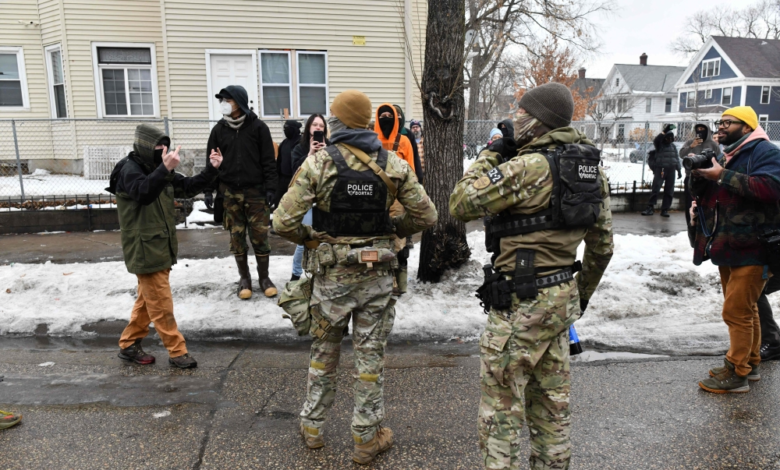
Public anger quickly escalated into clashes on Thursday near a government facility in Fort Snelling, a suburb of Minneapolis. Field reports indicated that federal agents used pepper spray and tear gas to disperse crowds of protesters who chanted slogans against the Immigration and Customs Enforcement (ICE). The area witnessed a series of skirmishes, with agents pushing back protesters and arresting several, while some protesters resisted.
Historical context: Minneapolis, a flashpoint of tension
These events cannot be separated from the historical and social context of Minneapolis, which in recent years has become a global focal point for discussions about police violence and racial justice. The city still bears the scars of the killing of George Floyd in May 2020, which sparked the largest wave of protests in modern US history. The current incident reopens old wounds, highlighting the ongoing crisis of trust between local communities and law enforcement agencies, whether local police or federal agencies like immigration authorities.
Expected impact and political dimensions
This incident is particularly significant given its timing and the nature of the official response. The White House's characterization of the incident as a "leftist movement" points to a sharp political polarization that could impact domestic policies related to immigration and law enforcement. This incident is expected to reignite calls from civil rights groups to review the authority of Immigration and Customs Enforcement (ICE) officers to use lethal force, and it may also lead to protests spreading to other states in solidarity with Minneapolis, thus placing civil rights and homeland security back at the forefront of national priorities.