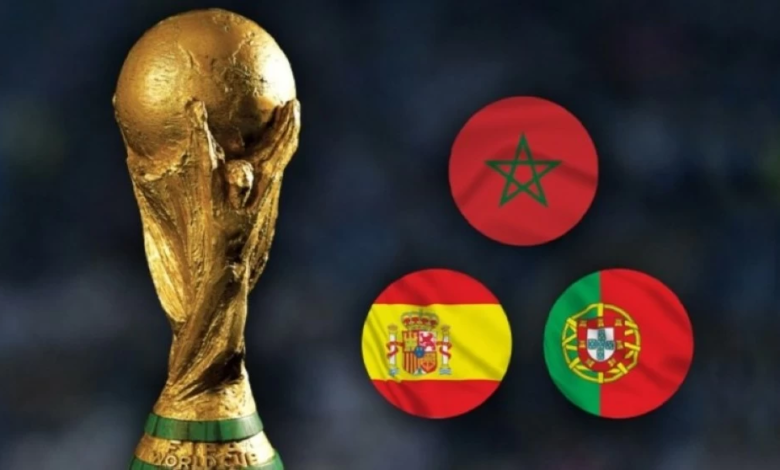
In a significant development regarding the organization of the world's most prominent football event, the official spokesperson for the Moroccan Football Federation, Mohamed Makrouf, clarified the facts concerning the circulating news about the venue for the 2030 World Cup final. This clarification came in response to statements attributed to the president of the Spanish Football Federation, Rafael Lozan, in which he hinted that Spain had secured the hosting rights for the final match of the World Cup, which will be organized through a joint bid from Morocco, Spain, and Portugal.
The truth about the final venue and the official stance
In an exclusive statement to the Okaz newspaper, Mohamed Makrouf confirmed that reports circulating about the final venue being predetermined are “completely unfounded.” The Moroccan official explained that the decision-making process for this trilateral bid is subject to rigorous criteria and high-level coordination meetings. He indicated that the selection of the stadium that will host the 2030 final will be made exclusively through an official meeting that includes representatives from the three countries (Morocco, Spain, and Portugal), in the presence of the most important party overseeing the tournament, FIFA. He emphasized that this crucial meeting has not yet taken place.
Hassan II Grand Stadium: The jewel of the Moroccan bid
This debate comes at a time when the Kingdom of Morocco is continuing its intensive preparations to bolster its sports infrastructure. Rabat is placing great emphasis on the "Grand Hassan II Stadium," currently under construction north of Casablanca. This sports complex is planned to be one of the largest stadiums in the world, with a capacity of 115,000 spectators, making it a strong and technically qualified candidate to host the final. Fouzi Lekjaa, president of the Royal Moroccan Football Federation, has previously expressed Morocco's legitimate ambition to win the honor of hosting the final, as a culmination of the African continent's efforts in this global event.
The importance of the 2030 World Cup and its historical context
The 2030 World Cup holds exceptional and historic significance, coinciding with the centenary of the first World Cup in 1930. This edition is unique in that it primarily brings together two continents (Europe and Africa), with celebratory matches to be held in South America, reflecting a message of cultural and civilizational rapprochement. The competition between Morocco and Spain to host the final is part of the natural dynamic of joint bids, with each country striving to showcase its organizational capabilities and advanced infrastructure.
Expected economic and sporting impact
The competition to host the final isn't limited to the sporting aspect alone; it extends to enormous economic and marketing benefits for the host country. Hosting an event of this magnitude means drawing the world's attention to the host city, boosting its tourism, transportation, and service sectors. For Morocco, hosting the final would be a historic first, solidifying its position as a rising sporting power and showcasing the ability of African nations to organize major international events to the highest international standards.