
Successful conclusion to the Endowments Forum in Madinah
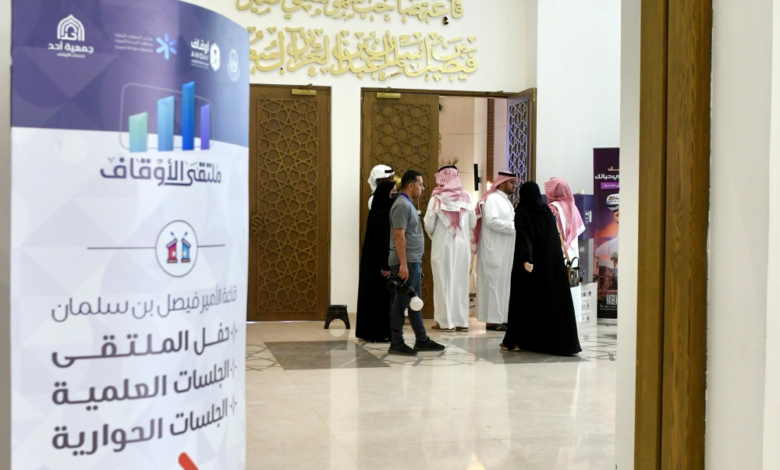
concluded successfully The Madinah Endowments Forum. This prominent event was organized by the Uhud Association for Endowments Services, in strategic partnership with the General Authority for Endowments and the Council of Charitable Associations in the region. The forum aimed to highlight the importance of the endowments sector and its pivotal role in achieving sustainable development and easing the burden on the state by increasing opportunities for community self-sufficiency.
Historical context: Medina, the cradle of Islamic endowments
Holding this forum in Medina is of paramount importance, as it is the cradle of endowments in Islamic history. It witnessed the establishment of the first prophetic endowments and those of the Companions, such as the endowment of the well of Ruma by the Companion Uthman ibn Affan (may God be pleased with him). Today, the Kingdom of Saudi Arabia draws inspiration from this great historical legacy to strengthen and develop the culture of endowments through modern institutional methods that ensure the preservation of the principal and the dissemination of its benefits, reflecting the ongoing care that the wise leadership gives to this vital sector.
Figures and statistics reflect the scale of the achievement
witnessed The Waqf Forum in Madinah a large turnout, with over 520 participants including experts and specialists. The scientific program included the presentation of 17 specialized papers, the implementation of 8 interactive workshops, and the provision of 85 individual guidance sessions. These efforts resulted in the launch of 29 high-quality waqf initiatives and the signing of 40 strategic agreements with the participation of 65 different entities, opening broader horizons for integration and multilateral institutional cooperation.
Keeping pace with the goals of the Kingdom's Vision 2030
Participants at the forum emphasized the crucial role of the endowment sector in supporting the goals of the Kingdom's Vision 2030. This is achieved through developing the non-profit sector, enhancing its contribution to the GDP, and officially documenting and registering endowments. Discussions also focused on the importance of raising community awareness, encouraging new donors, and developing innovative endowment funds that meet the evolving needs of society and keep pace with economic and social developments.
Employing modern technologies and artificial intelligence
Among the most prominent recommendations that emerged from the forum was the necessity of integrating modern technologies into the management and documentation of endowments. Recommendations included the use of geographic coordinates and aerial photography to document endowment properties and to enhance electronic connectivity among relevant entities. Experts also called for the formation of specialized committees to develop AI-based solutions for managing endowment investments and to design innovative programs to attract new donors based on rigorous scientific studies.
Developmental impact and future aspirations
At both the local and regional levels, the forum's outcomes are expected to contribute to a qualitative shift in the governance of endowment partnerships. The forum recommended the development of a standardized guide for governing these partnerships and the establishment of specialized endowment think tanks in collaboration with universities and the non-profit sector. This approach will maximize the developmental impact of the endowment sector in the Kingdom and make it a model to be emulated internationally in achieving financial and social sustainability.
Thanks and appreciation to the wise leadership
At the conclusion of its proceedings, the participants of the forum expressed their deepest gratitude and appreciation to the wise leadership – may God support them – for their unlimited support and generous patronage of the endowments and charitable work sector. They also commended the patronage of His Royal Highness the Prince of Madinah for the forum, and praised the efforts of the General Authority for Endowments, the Madinah Chamber of Commerce, and all partners who contributed to the success of this exceptional event.