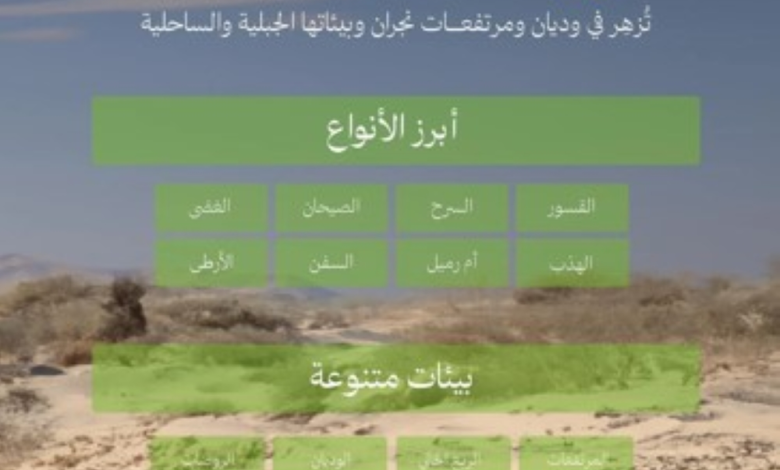

In a strategic move reflecting a commitment to achieving the environmental goals of Saudi Vision 2030, the National Afforestation Program a detailed plant map of the Najran region, identifying 22 native plant species perfectly suited to the area's geological and climatic conditions. This announcement serves as a cornerstone for supporting the Saudi Green Initiative , which aims to combat desertification, reduce carbon emissions, and restore ecological balance across the Kingdom.
Geographical diversity in Najran: a nurturing environment for life
The Najran region boasts unique geographical features that make it one of the most diverse regions in the Kingdom. Its terrain ranges from towering mountain peaks in the west, through fertile valleys and meadows, to golden sand dunes on the edge of the Empty Quarter in the east. This topographical variation necessitated the selection of specific plant species capable of withstanding harsh climatic conditions, water scarcity, and high temperatures, a requirement that the program successfully identified through its technical and field studies.
Key approved plant species
The program's technical report confirmed that the selected species represent an integral part of the region's natural identity, ranging from towering trees and perennial shrubs to annual plants. Among the most prominent of these species, which will form the backbone of future afforestation projects, are:
- Main trees: The list was topped by “Sarh,” “Qaraz,” “Safan,” and “Hadhab” trees, which are species known for their high ability to stabilize the soil and provide shade.
- Natural windbreaks: The list included plants such as “Ghadha”, “Arta”, and “Tarfa”, in addition to “Nashm”, “Maran”, and “Sayhan”, which play a vital role in stopping the wind and reducing sand encroachment, especially in open areas adjacent to the desert.
- Biodiversity plants: The list included varieties of high environmental value such as “Aloe Vera”, “Al-Basham”, “Al-Kadhdhab”, “Um Rumail”, “Sharfath”, “Himrar”, “Adhlam”, and “Al-Qaswar”.
Environmental and economic importance of afforestation
The importance of cultivating these native species extends beyond mere aesthetics, encompassing profound environmental and economic dimensions. Environmentally, these plants contribute to lowering temperatures, improving air quality, and protecting the soil from erosion, in addition to providing a safe haven for wildlife and birds. Economically, relying on native plants significantly reduces irrigation and maintenance costs due to their natural adaptation to water scarcity, thus promoting sustainability and preserving water resources for future generations.
Accurate scientific classification and community partnership
To ensure the success of cultivation operations, the program classified these plants into precise scientific families, most notably the legume family (Fabaceae), the tamarisk family (Terfaceae), the pistachio family (Pistacia terebinthus), the mallow family (Malvaceae), and the borage family (Boraginaceae), thus providing a robust scientific database for specialists and researchers. In a related context, the program called upon all segments of society, including governmental and private sectors, and non-profit organizations, to adopt a culture of sustainable afforestation. It emphasized the importance of participating in voluntary afforestation campaigns using these approved species to ensure the success of green initiatives and to correct misconceptions related to the indiscriminate planting of harmful, non-native plants.