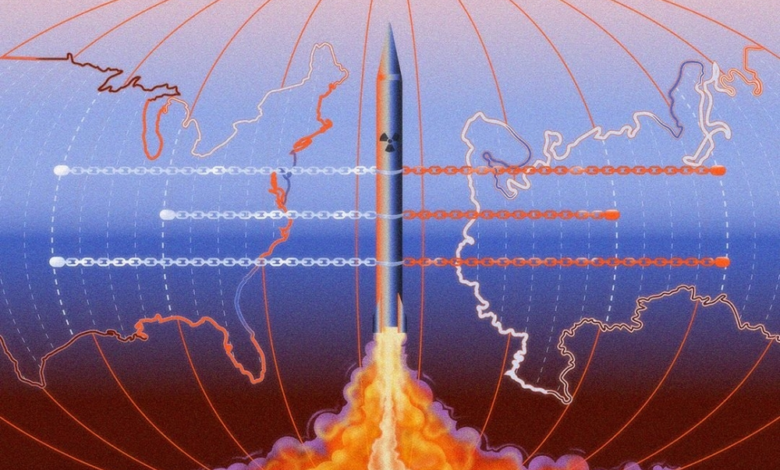

NATO has issued an urgent appeal to world powers to exercise maximum restraint and uphold international responsibility, coinciding with the expiration of the New START treaty, the last legally binding framework for nuclear arms control between the United States and Russia. A senior NATO official warned that the vacuum left by the treaty poses unprecedented challenges to global security.
End of the era of nuclear control
A NATO official, as reported by international news agencies, affirmed that “restraint and transparency in the nuclear sphere are fundamental pillars for maintaining global strategic stability.” He noted that the alliance is closely monitoring Russian and Chinese actions, as both countries are actively modernizing and expanding their nuclear arsenals, necessitating that NATO take “the necessary steps” to ensure effective deterrence and the defense of its member states.
These developments come as China refuses to participate in any current nuclear disarmament talks, despite repeated US calls for negotiations to avoid a new arms race that could spiral out of control.
Historical background and strategic importance of “New START”
To understand the gravity of the current situation, one must go back to 2010, when the New START Treaty was signed in Prague by then-US President Barack Obama and his Russian counterpart Dmitry Medvedev. This treaty was considered a cornerstone of post-Cold War international security, as it placed strict and verifiable limits on strategic offensive arms.
The treaty stipulated a limit of 1,550 deployed strategic nuclear warheads per country and restricted the number of launchers and heavy bombers to 800 (700 of which were deployed). Most importantly, the treaty included mechanisms for reciprocal inspections and data exchange, providing a level of transparency that is entirely absent today.
The implications of the absence of the treaty on international security
With the treaty's expiration and Moscow's earlier announcement of suspending its participation, the world enters a period of uncertainty, lacking the legal frameworks that have governed nuclear relations for decades. International security experts believe that the absence of verification mechanisms increases the risk of miscalculation and fuels fears of wider nuclear proliferation.
Russia's negative stance, expressed by the Kremlin with regret over the treaty's expiration and blaming the West, signals escalating geopolitical tensions. NATO, on the other hand, believes that maintaining communication channels and exercising restraint are the only ways to prevent the world from sliding into a catastrophic nuclear confrontation at a time when the global security landscape is undergoing dramatic changes.