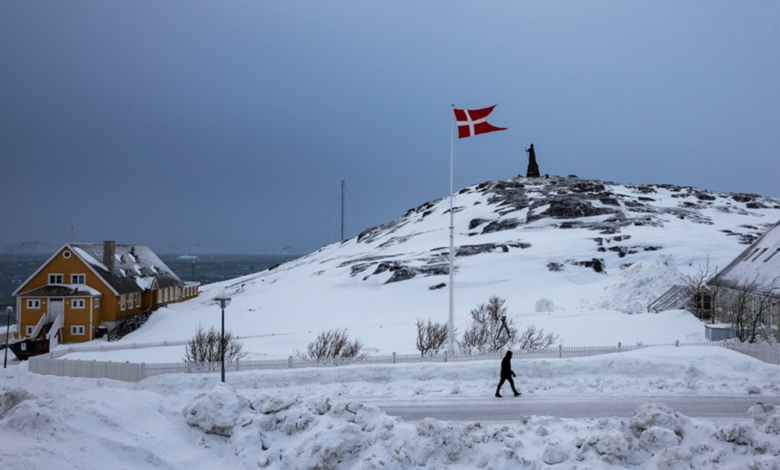

In a move reflecting growing international interest in the Arctic region, NATO announced on Tuesday that it is planning a new security mission aimed at strengthening its presence in the Arctic. This strategic move follows the political controversy sparked by US President Donald Trump's call for the annexation of Greenland, justifying it as necessary to protect the region and secure Western interests there.
Important details of “Guardian of the Arctic”
Martin O'Donnell, spokesman for NATO's Supreme Allied Commander Europe, confirmed that preparations are underway for an enhanced surveillance mission called "Arctic Sentinel." O'Donnell explained that the operation primarily aims to "strengthen NATO's operational and surveillance presence in the Arctic and far northern regions," noting that the alliance seeks to ensure regional stability amidst rapidly evolving geopolitical circumstances. He did not disclose specific logistical details regarding troop size or the type of equipment to be deployed.
This mission is similar in nature to previous NATO operations in the Baltic Sea region and on the Eastern Front, which aimed to deter potential threats and secure the Allies' borders. This move is seen as one of the military and diplomatic options available for bolstering security in the Arctic Circle, the same motivation cited by the US president in his earlier announcement of his desire to purchase Greenland.
The strategic and geopolitical importance of the Arctic
This announcement cannot be separated from the broader context of escalating international competition over the Arctic. With global warming and melting ice, new shipping lanes are emerging that could reshape the global trade map, in addition to the discovery of vast natural resources such as oil, gas, and rare minerals. These factors have transformed the region into an arena of competition among major powers, with Russia bolstering its military presence in the north and China beginning to define itself as a “near-Arctic state,” prompting NATO to reassess its defense strategy in the region.
Greenland, which is self-governing and part of Denmark (a NATO member), is a vital focal point in this conflict, given its geographical location that controls access between the Arctic and the Atlantic Ocean, and its hosting of the strategic US Thule Air Base.
Containing the diplomatic crisis
On the political front, Trump's remarks regarding Greenland triggered one of the most sensitive crises within NATO since its founding in 1949, with Denmark deeming the idea "absurd," leading to temporary tension. However, the US president later ruled out the option of seizing the island by force, favoring a negotiated solution.
In an attempt to bridge the divide and unify visions, Trump indicated that he had reached a framework agreement with NATO Secretary General Mark Rutte on the sidelines of the World Economic Forum in Davos. While details of this framework agreement have not been disclosed, observers speculate that it concerns joint mechanisms for sharing security burdens in the north and increasing defense investments, thus safeguarding American and European interests without infringing on the sovereignty of member states.