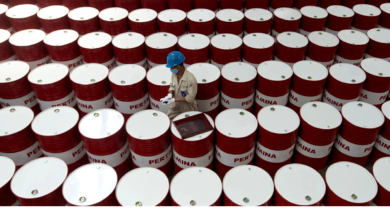

Global oil markets experienced a sharp decline today, with crude prices falling by more than a dollar a barrel, impacted by a range of economic factors that dampened investor sentiment. Brent crude futures fell by $1.80 a barrel, a 2.7% loss, settling at $67.48 a barrel, a level that raises numerous questions about the near-term outlook for prices.
In a related development, US crude was not immune to these declines, with West Texas Intermediate (WTI) falling by $1.80 per barrel, or 2.8 percent, to close at $63.41 per barrel. These figures reflect a sense of unease prevailing in global trading circles and demonstrate the market's extreme sensitivity to current economic developments.
Market context and economic background
This decline comes at a time of economic uncertainty in global markets. Historically, oil prices are closely linked to global economic growth rates; the greater the fears of a potential recession or slowdown in growth in major economies like China and the United States, the lower the expectations for fuel demand, putting downward pressure on prices. The US dollar exchange rate also plays a pivotal role in this equation, as a stronger dollar makes oil more expensive for holders of other currencies, reducing demand and driving prices down.
The importance of the event and its expected effects
This decline has mixed effects both domestically and internationally. For energy-consuming countries, lower prices are good news that could help curb inflation and reduce production and transportation costs, potentially bolstering citizens' purchasing power. However, for oil-producing countries, persistently low prices could strain public budgets, potentially prompting cartels like OPEC+ to reconsider their current production policies in an effort to restore market balance.
Furthermore, economic analysts are closely monitoring these movements, as stable energy prices at moderate levels are a crucial factor in central bank decisions worldwide regarding interest rates. The current decline may send mixed signals about the health of the global economy, necessitating close monitoring of US inventory indicators and global manufacturing data in the coming days to determine whether this drop is merely a temporary correction or the beginning of a longer-term downward trend.