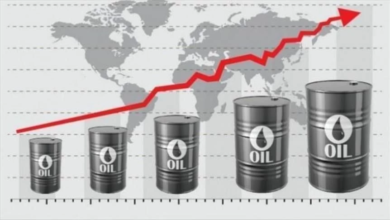

Oil prices rose sharply today, approaching the $66 per barrel mark, buoyed by a wave of optimism in global markets following a decrease in geopolitical and trade tensions that had been casting a shadow over the global economic outlook. This surge was fueled by a shift in the political tone of US President Donald Trump, which eased investor concerns about the future of energy demand.
Market performance and price movements
In trading details, Brent crude futures rose 10 cents, or 0.15%, to $65.34 a barrel. Meanwhile, West Texas Intermediate (WTI) crude futures for March delivery climbed 14 cents, or 0.23%, to settle at $60.76 a barrel. This move reflects investors' appetite for riskier assets and strategic commodities as immediate political risks recede.
Breakthrough in transatlantic relations
Political factors played a pivotal role in supporting prices, as US President Donald Trump backed down from his earlier threats to impose new tariffs related to Greenland. This retreat significantly reduced the likelihood of a new trade war between the United States and the European Union, a conflict that would have harmed global economic growth and consequently weakened demand for crude oil. Analysts point out that any stabilization in trade relations between the major powers has an immediate and positive impact on energy markets.
Supply disruptions and the role of OPEC+
On the supply side, prices received additional support from production disruptions in Kazakhstan, a key member of the OPEC+ alliance. Contracts rose by more than 1.5% and 0.4% in the previous two sessions after Kazakhstan was forced to suspend production at two oil fields due to technical problems related to electricity distribution. This incident demonstrates the market's sensitivity to any sudden supply shortages and underscores the importance of the alliance members' commitment to market stability.
The Iranian file and US stockpiles
In a related development in the Middle East, Trump's statements regarding Iran helped to ease fears of an imminent military conflict, as he expressed hope that further military action would be avoided, provided that Tehran did not resume its nuclear program. This relative calm reduced the "risk premium" that is typically added to oil prices when tensions rise in the Gulf.
Despite these supportive factors, prices faced limited pressure from US inventory data. Market sources cited the American Petroleum Institute (API) reporting that crude oil inventories rose by 3.04 million barrels in the week ending January 16, while gasoline stocks jumped by 6.21 million barrels, and distillate stocks declined slightly, indicating mixed signals in US domestic demand.