
Madagascar has been struck by a new humanitarian and environmental disaster as the death toll from Tropical Cyclone Jizani continues to rise. The cyclone devastated the island's northeast coast, and authorities announced today that at least 59 people have died, while 15 remain missing. There are fears that the number will rise further as search and rescue operations continue in the rubble and flooded areas.
Details of the disaster in Toamasina
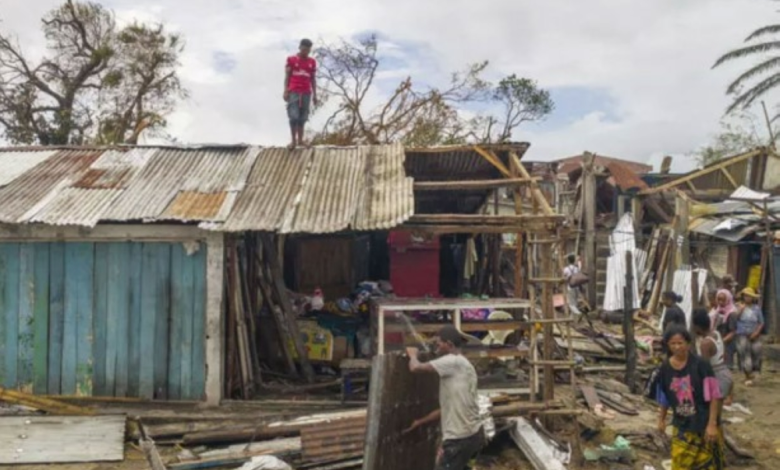
The cyclone swept through the coastal city of Toamasina and surrounding villages with record-breaking winds of 250 kilometers per hour, turning the area into a scene of widespread devastation. Field reports indicated that the force of the winds not only uprooted trees and power lines but also flattened entire residential neighborhoods. Official statistics state that more than 800 people sustained injuries of varying severity, while approximately 16,000 residents were forcibly displaced from their homes, seeking refuge in schools and government centers designated for emergency shelter.
Material losses and infrastructure
The damage was not limited to the tragic loss of life; it also affected infrastructure on an unprecedented scale. The cyclone completely or partially destroyed approximately 25,000 homes, leaving thousands of families homeless. Floodwaters from the cyclone's torrential rains inundated another 27,000 homes, damaging property and crops upon which local residents depend for their daily livelihoods.
The geographical and climatic context of Madagascar
Madagascar, the world's fourth-largest island, is one of the most tropical cyclone-prone countries in the Indian Ocean. The country experiences an annual cyclone season, typically lasting from November to April, during which storms form in warm waters and move westward to strike the island's eastern coast. The population suffers from fragile infrastructure; many homes are built from simple materials like wood and mud, making them unable to withstand winds exceeding 200 km/h. This explains the immense devastation caused by Cyclone Jizani.
Expected humanitarian and economic repercussions
This cyclone is expected to have long-lasting repercussions on Madagascar's local economy and food security. The affected areas in the northeast are vital centers for the cultivation of vanilla, cloves, and rice, key export commodities. Crop damage could lead to food shortages and price hikes, exacerbating the suffering of a population already facing economic challenges. Furthermore, there are serious health concerns regarding the spread of waterborne diseases due to the contamination of drinking water sources with sewage and flooding, necessitating urgent intervention from international organizations to provide medical and food assistance.
Rescue and civil defense teams are continuing their tireless efforts to reach isolated areas where roads leading to them have been cut off, in a race against time to find the missing and provide assistance to the displaced under extremely complex weather and logistical conditions.