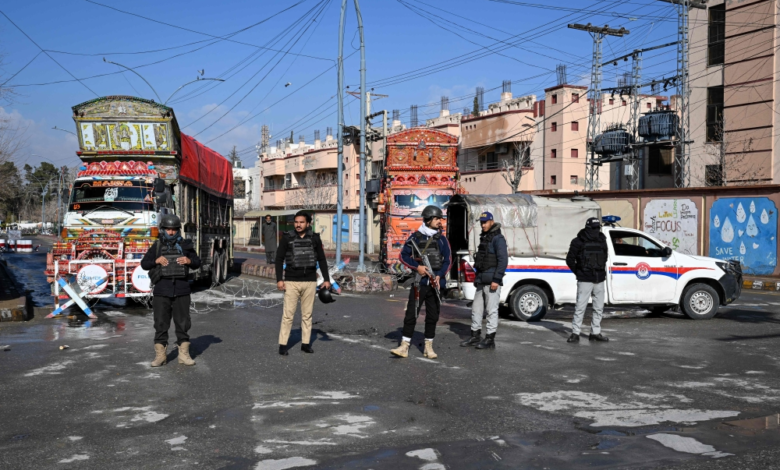

Balochistan province witnessed a bloody wave of violence and a dangerous security escalation over the weekend, resulting in the deaths of nearly 250 people in a series of coordinated attacks and violent clashes between Pakistani armed forces and armed separatist groups, according to security officials.
Details of the bloody toll
A senior security official, speaking on condition of anonymity, reported that attacks by the separatist Balochistan Liberation Army (BLA) resulted in the deaths of at least 36 civilians and 22 members of the Pakistani security forces. In a swift and decisive response, the armed forces launched extensive search operations and direct engagements, eliminating 197 militants. This brings the total death toll to unprecedented levels in the history of the modern conflict in the region.
The context of the conflict and the strategic importance of the region
To understand the depth of this escalation, one must consider the strategic importance of Balochistan. Pakistan's largest and least densely populated province, it occupies a sensitive geographical location bordering both Iran and Afghanistan. It is also rich in natural resources, including gas and minerals, and is a key component of the China-Pakistan Economic Corridor (CPEC), which includes the strategic port of Gwadar.
Despite these riches, the region has suffered from ongoing unrest for decades, with separatist groups, most notably the Balochistan Liberation Army, waging an armed insurgency demanding independence or greater autonomy, accusing the central government of exploiting the region’s resources without developing it, which Islamabad consistently denies.
Expanding the circle of targeting
The Balochistan Liberation Army (BLA), designated a terrorist organization by the United States and Pakistan, claimed responsibility for recent attacks that were characterized by a qualitative expansion in targets. These operations included attacks on military installations, police stations, and prisons, as well as attacks on banks and civilian infrastructure. Reports indicated the use of a variety of tactics, including direct gunfire and suicide attacks targeting civil administration officials.
Ongoing security repercussions
Sporadic clashes continue in several areas within the region as Pakistani forces strive to regain full control and secure key roads and vital installations. This escalation exacerbates the security challenges facing Pakistan, particularly given the increasing frequency of attacks in recent years, which are no longer limited to security forces but have also targeted civilians from other regions and foreign companies working on development projects. This presents the government with a difficult test in establishing security and stability in this vital region.