Saudi Arabia and Jordan: A clash of tactics and market value in the Arab Cup semi-finals

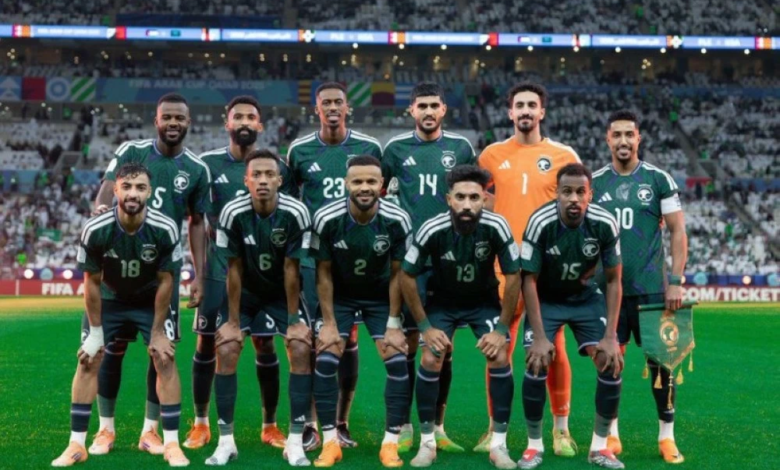
Tonight, all eyes in the Arab world will be on the highly anticipated semi-final clash between Saudi Arabia and Jordan in the Arab Cup, a match considered by critics to be one of the tournament's toughest and most competitive encounters. This match carries particular significance given the high level of performance both teams have displayed in previous rounds, making predicting the outcome extremely difficult despite the numerical differences.
The conflict between market value and on-the-ground reality
On paper, the economic advantage clearly lies with the Saudi national team, whose players' market value exceeds €30 million, compared to approximately €14 million for the Jordanian national team. However, analysts, including national team coach Majed Al-Ghamdi, believe that money doesn't decide Arab derbies, as the technical differences on the field are very close, with clear variations in tactical style and the strengths of each side.
Renard's offensive weapons
French coach Hervé Renard, manager of the Saudi national team, relies on a dynamic attacking system characterized by exceptional speed in ball movement, particularly in the final third of the pitch. The Green Falcons' strength lies in the presence of established players like captain Salem Al-Dawsari and Saleh Abu Shamat, who excel at playing in tight spaces and creating opportunities out of nothing. Renard's philosophy is based on high pressing and disrupting the opponent's build-up play, supported by clinical strikers inside the box such as Firas Al-Buraikan and Saleh Al-Shehri, who are capable of converting half-chances into decisive goals.
The brave ones... discipline and fighting spirit
On the other side, the Jordanian national team enters the match with a pragmatic tactic devised by coach Jamal Al-Salami. This tactic relies primarily on a solid defensive structure (a compact defensive block) and closing down spaces for the opponent's key players. Al-Salami is banking on quick attacking transitions and swift counter-attacks to exploit the Saudi team's attacking impetus, capitalizing on the speed and skill of players like Ahmed Ersan, Ali Alwan, and Nizar Al-Rashdan. The psychological factor and high fighting spirit (grinta) that characterize the Jordanian players are an additional weapon that could mitigate the technical differences and compensate for any shortcomings in individual skills.
Historical and regional dimensions of the confrontation
The importance of this match transcends the mere competition for a place in the final; it represents another chapter in the exciting rivalry between Asian Arab national teams. The Arab Cup tournaments are considered a golden opportunity for these teams to test their readiness for major continental and international competitions, such as the World Cup qualifiers and the Asian Cup. Victory in such matches provides a tremendous morale boost and reinforces regional dominance, placing additional pressure on players and coaching staff to deliver their best in this footballing spectacle.