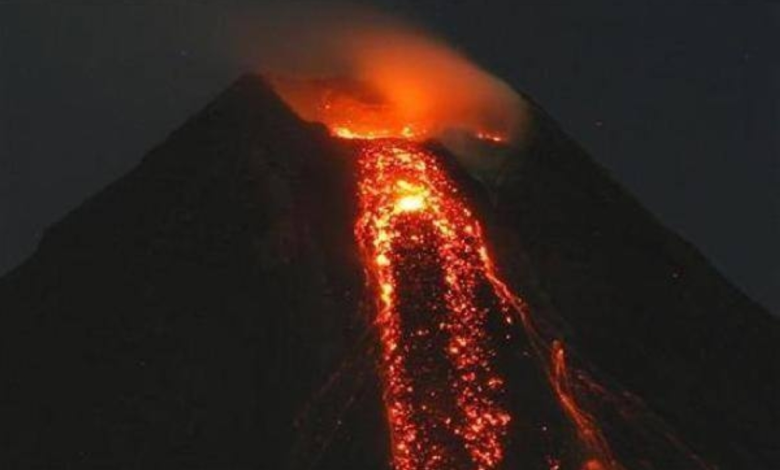

The Philippine Institute of Volcanology and Seismology (PHIVOLCS) renewed its strong warnings on Thursday for residents and tourists to stay away from the vicinity of Mayon Volcano, due to continued volcanic activity and lava flows. These warnings are part of the authorities' efforts to ensure the safety of residents in the areas surrounding this active geological feature.
Intense seismic and rock activity detected
In the daily monitoring report, Dr. Teresito Pacolcol, head of the institute, explained that monitoring equipment had recorded alarming activity over the past 24 hours. One volcanic earthquake was detected, along with 162 rockfalls and 50 massive lava flows (PDCs) as of this morning. This data indicates geological instability within the volcano, necessitating continued vigilance and avoidance of the “permanent danger zone,” which authorities typically define as a radius of several kilometers around the crater.
"Mayon"... The perfect killer cone
Mount Mayon, located in Albay province in the Bicol region, rises to a height of 2,462 meters above sea level. Known globally as the "Perfect Cone" due to its stunningly symmetrical cone shape, it attracts tourists and mountaineers from around the world. However, this beauty masks a looming danger. Mayon is one of the most active volcanoes in the Philippines, having erupted more than 50 times in the last 400 years. Perhaps the most tragic eruption in its recorded history occurred in 1814, when lava and ash completely buried the town of Cagsawa, leaving only the church bell tower standing as a historical witness to this day.
The Philippines and the Pacific Ring of Fire
The activity of Mount Mayon is not an isolated event. The Philippines lies geographically within the Pacific Ring of Fire, a horseshoe-shaped zone around the Pacific Ocean basin characterized by intense seismic and volcanic activity due to tectonic plate movement. This geographical location makes the Philippine archipelago constantly vulnerable to earthquakes and volcanic eruptions, necessitating the development of sophisticated early warning systems and permanent evacuation plans.
Ongoing repercussions and economic impacts
The current volcanic activity is an extension of the unrest that began significantly in June 2023, which forced authorities to carry out large-scale evacuations of approximately 20,000 people from nearby villages. These volcanic eruptions directly impact the local economy, as ashfall damages agriculture and temporarily halts tourism, placing additional strain on communities that rely on tourism and agriculture as primary sources of income.