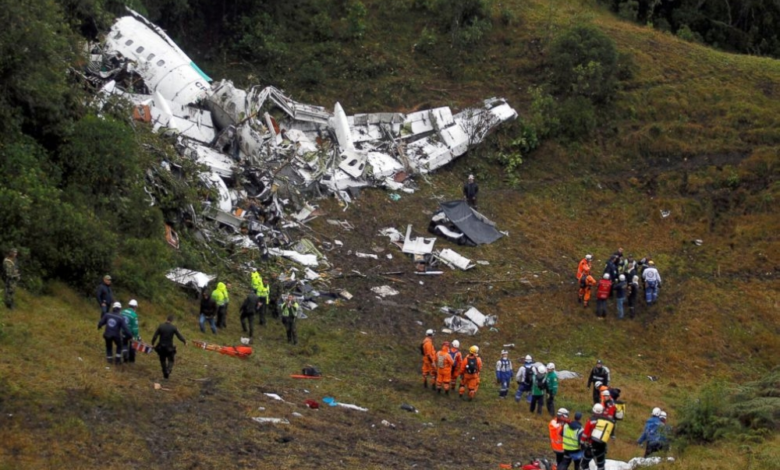
The Colombian Civil Aviation Authority announced in an official statement that a tragic air accident occurred on Wednesday, resulting in the deaths of 15 people. A passenger plane crashed near the border with Venezuela. Authorities confirmed that there were no survivors among the passengers or crew members on board.
In detailing the incident, the agency explained that the ill-fated aircraft belonged to the Colombian state-owned airline, Satena. The plane had taken off from the border city of Cúcuta, bound for the nearby city of Ocaña, but suddenly lost contact with air traffic control shortly before its scheduled landing. This prompted a search and rescue operation, which later located the wreckage.
Details of the journey and the search for survivors
A senior official at the Civil Aviation Authority told local media that there were “no survivors of the crash,” noting the extreme force of the impact. Rescue teams initially faced difficulties reaching the crash site due to the terrain, but were eventually able to confirm the deaths and recover the bodies. Authorities are currently securing the crash site to gather evidence for the investigation.
Satina Company and its vital role
Satina (National Territories Air Service) is a cornerstone of Colombia's air transport sector. State-run and often overseen by the Colombian Air Force, the company was founded to connect remote and geographically isolated areas of Colombia to major urban centers—areas often inaccessible to private commercial airlines due to difficult terrain or limited economic viability. This incident comes as a shock to the company, which serves a large segment of the population for their domestic travel.
Geographical challenges and aviation safety
This incident reopens the debate about the challenges of flying in Colombia, a country characterized by its rugged, mountainous terrain. The Andes Mountains crisscross the country, creating difficult air corridors and unpredictable air currents. The border region between Colombia and Venezuela, where the accident occurred, is often marked by changeable weather conditions and terrain that can pose a challenge even to experienced pilots.
Despite significant improvements in aviation safety in Colombia and Latin America over the past decades, short regional flights over mountainous areas remain risky. The Civil Aviation Authority is expected to launch a comprehensive investigation, including analysis of the black box (if available), examination of the aircraft's maintenance records, and a review of the weather conditions at the time of the crash, to determine the precise causes of the disaster and prevent future occurrences.