Visiting times for the Prophet's Mosque exhibitions: Architecture and Manuscripts

Introduction: Enriching the cultural experience in the city of the Messenger of God
In a move aimed at enhancing the cultural dimension and enriching the experience of visitors to the Two Holy Mosques, the General Authority for the Care of the Grand Mosque and the Prophet's Mosque announced the opening of two prominent cultural exhibitions. These exhibitions highlight significant aspects of the history and expansions of the Prophet's Mosque in Medina, as part of ongoing efforts to showcase the mosque's rich cultural and historical heritage and offer a comprehensive experience that combines spirituality and knowledge.
Details of the Prophet's Mosque Architecture Exhibition
The 'Prophet's Mosque Architecture Exhibition' welcomes visitors on the southern side of the mosque, specifically opposite Gate 307. This unique exhibition offers a comprehensive documentary overview of the history of the Prophet's Mosque's architecture and its successive expansions throughout different Islamic eras. The exhibition is distinguished by its use of cutting-edge technology, featuring detailed models and advanced interactive visual materials that clearly illustrate the architectural and engineering phases the Holy Mosque has undergone from its founding to the present Saudi era.
Rare Manuscripts Exhibition: A Window into Islamic Heritage
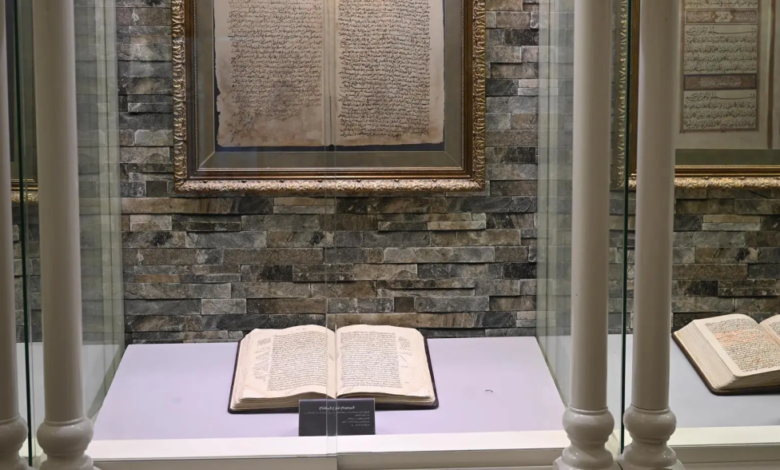
Alongside the architecture exhibition, the Rare Manuscripts Exhibition is open to visitors in the southern courtyards of the Prophet's Mosque, opposite Gate 368. This valuable exhibition houses a unique collection of rare manuscripts and important historical documents. These artifacts reflect a bright aspect of Islamic scientific and cultural heritage, offering researchers and visitors the opportunity to explore the intellectual treasures penned by Muslim scholars throughout the centuries.
Visiting times for the Prophet's Mosque exhibitions
To ensure maximum accessibility for visitors, the organizers have set daily visiting hours for both exhibitions. Visits will be from 10:00 AM to 9:30 PM. These flexible hours are designed to accommodate the flow of worshippers and visitors, inviting them and those interested in Islamic history to take advantage of these exhibitions, which combine knowledge and documentation in a unique spiritual and cultural atmosphere within the Prophet's Mosque.
Historical context: The architectural journey of the Prophet's Mosque through the ages
These exhibitions derive their significance from the profound importance of the Prophet's Mosque, founded by the Prophet Muhammad (peace be upon him) in the first year of the Hijra. The mosque was not merely a place of worship, but a center of the Islamic state and a cradle of civilization. Throughout history, the Prophet's Mosque has undergone a series of major expansions, beginning with the era of the Rightly Guided Caliphs, continuing through the Umayyad and Abbasid dynasties, and culminating in the Ottoman era. In modern times, under Saudi rule, the Prophet's Mosque has witnessed the most extensive expansions in its history, encompassing infrastructure development, expanded courtyards, and the provision of state-of-the-art technology to ensure the comfort of millions of worshippers. This long and complex history is meticulously and professionally documented by the Architecture Exhibition.
Importance and impact: locally, regionally, and internationally
At the local level, these cultural initiatives are perfectly aligned with the objectives of Saudi Arabia's Vision 2030, specifically the Guests of God Service Program, which aims to enrich the religious and cultural experience of pilgrims, Umrah performers, and visitors. The two exhibitions serve as the foundation for a number of specialized museums and galleries dedicated to documenting the history of the Prophet's Mosque.
On both regional and international levels, these exhibitions serve the millions of Muslims who flock annually from all corners of the globe to visit Medina. Presenting documented historical information in multiple languages and using modern presentation methods contributes to correcting misconceptions, disseminating moderate Islamic culture, and strengthening Muslims' connection to their rich cultural heritage. It also highlights the Kingdom's leading role in caring for the Two Holy Mosques and preserving Islamic heritage for future generations.