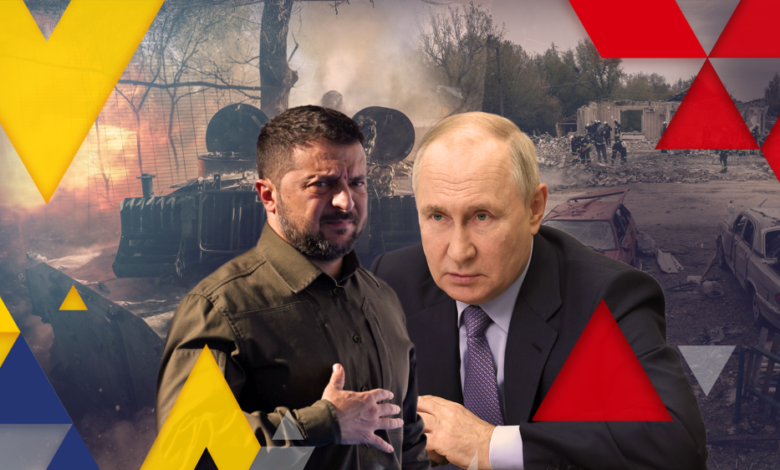
Putin and Zelensky 2026: Promises of victory and outlines of a peace agreement

As the first hours of 2026 dawned, messages from Moscow and Kyiv diverged, painting a complex picture of the future of the conflict in Eastern Europe. While Russian President Vladimir Putin renewed his pledge to his people of a decisive "victory," Ukrainian President Volodymyr Zelensky surprised the world with optimistic pronouncements about the imminent conclusion of a comprehensive peace agreement, reflecting a potentially pivotal stage in the war as the new year unfolded.
Putin: A call for resilience and ignoring the attacks
In his traditional New Year's address, Russian President Vladimir Putin focused on boosting morale within Russia, delivering a direct message calling for unity and support for the armed forces. Addressing the Russian people, Putin said, "We believe in you and in our victory," urging citizens to "support the heroes" fighting on the front lines. He wished the soldiers and commanders a happy new year, emphasizing that "millions of people across Russia are thinking of you.".
What was striking about Putin's speech was his complete omission of any mention of the recent drone attack that Moscow accuses Kyiv of carrying out against his residence in the Novgorod region—an accusation Ukraine has categorically denied. This omission reflects the Kremlin's desire to focus on the grand narrative of victory rather than getting bogged down in the details of military operations that could provoke domestic concern.
Zelensky: The decisive 10% equation
On the other side, from the capital Kyiv, Ukrainian President Volodymyr Zelenskyy offered a detailed numerical assessment of the negotiations. In a video message via Telegram, he announced that his country was just a few steps away from ending the war, stating that "the peace agreement is 90% ready.".
Zelensky explained that the remaining 10% carries enormous strategic weight, stating, "This 10% will determine the fate of peace, the fate of Ukraine, and the fate of Europe." This statement suggests that the sticking points relate to highly sensitive sovereignty and security issues, which may include border arrangements or long-term international security guarantees.
Context of the conflict: Four years of attrition
These statements come as the conflict nears its fourth year since the start of Russia’s large-scale military operations in February 2022. Throughout these years, the confrontation has transformed from swift military operations into a protracted war of attrition, redrawing the world’s geopolitical map. This period has witnessed unprecedented economic sanctions against Russia and massive Western military support for Ukraine, making the battlefield a true test of both sides’ economic and military resilience.
Expected regional and international impacts
Talk of an "imminent peace" or a "decisive victory" in 2026 is not just about the two warring states; its implications extend to the entire global order. Any potential peace agreement will reshape the security architecture of the European continent and determine the future of relations between Russia and NATO. Furthermore, global markets, particularly energy and food markets, which have been severely impacted by the war, are watching closely for any signs of de-escalation that could restore stability to supply chains.
While Putin clings to the rhetoric of victory to ensure the stability of his domestic front, Zelensky, through his talk of peace, is trying to pressure the international community to accelerate diplomatic solutions that guarantee his country's sovereignty, making 2026 a crucial year that may bring an end to the largest land conflict Europe has witnessed since World War II.