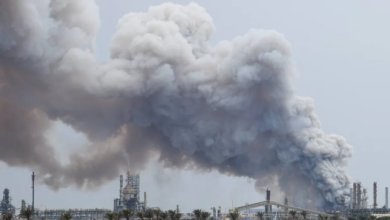
Details of the death of 6 people after a helicopter crash in Qatar due to a technical malfunction

Local and regional communities were shocked by the tragic news of a helicopter crash in Qatar , which sadly claimed the lives of all six people on board. According to initial reports, the primary cause of this tragic accident was a sudden technical malfunction that led to the loss of control of the aircraft and its subsequent crash.
Details of the helicopter crash in Qatar and the immediate response
Upon receiving the report of the accident, rescue and ambulance teams, along with relevant security authorities in Qatar, rushed to the crash site to conduct search and rescue operations. Despite the rapid response, the severity of the impact, resulting from the technical malfunction, led to the deaths of all six passengers. A security cordon was established around the crash site to facilitate the work of the investigation teams and the collection of evidence and debris. This is a standard procedure followed in all aviation accidents worldwide to ensure that no evidence that could contribute to uncovering the precise circumstances of the disaster is tampered with.
General context: Air safety record and helicopter use in the region
Qatar and the Gulf region in general have an excellent aviation safety record, with all aircraft, including helicopters, subject to rigorous maintenance standards and close oversight by regulatory bodies such as the Civil Aviation Authority. Helicopters are widely used in the region for a variety of purposes, including medical transport, search and rescue operations, VIP transport, and logistical support for offshore oil and gas platforms. Therefore, an accident of this magnitude is rare and warrants a comprehensive review of existing safety protocols.
Procedures for investigating technical malfunctions of helicopters
In such incidents, Qatari authorities launch an official and immediate investigation to determine the root cause of the technical malfunction. The investigation typically includes analyzing the black box (flight data recorder and cockpit voice recorder, if available), reviewing the aircraft's periodic maintenance records, and examining the history of previous malfunctions of the same model. Experts from the helicopter manufacturer are often called upon to participate in the investigation to ensure accurate and transparent conclusions are reached, thus preventing similar tragedies from recurring in the future.
Expected impact of the incident and precautionary measures
Locally and regionally, this incident has a profound impact, raising questions about the reliability of certain helicopter models and the need for more intensive technical inspections. It is expected that airlines and local operators will be instructed to conduct thorough inspections of their fleets of similar helicopters. The loss of six lives in this accident underscores once again the critical importance of strict adherence to preventative maintenance schedules and the need for pilots to be trained to handle extreme emergencies.
The technical complexity of helicopters and the importance of maintenance
Helicopter accidents are generally more complex than those involving fixed-wing aircraft, due to their reliance on intricate rotary systems that require extremely precise maintenance. International civil aviation organizations consistently emphasize the need for continuous updates to maintenance programs and the exchange of technical information between countries and manufacturers to prevent manufacturing defects or human errors during maintenance, thereby ensuring the highest levels of safety for passengers and flight crews.