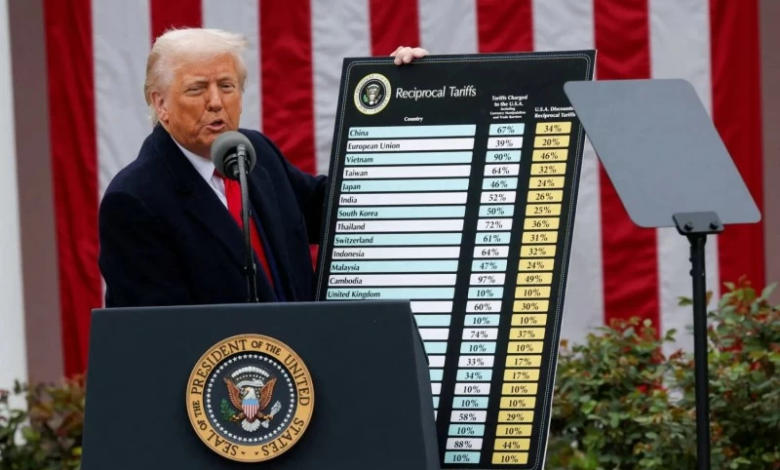

US President Donald Trump announced on Saturday a new escalation in US trade policy, signing a decision to impose a comprehensive global tariff of 10% on all countries, in a move the White House described as an absolute necessity to "reset the import system and protect American economic interests.".
Details of the decision and implementation date
The White House explained in its official statement that President Trump signed the proclamation imposing a temporary 10% tariff on imports, setting February 24 as the official date for the decision to take effect. This decision reflects the current US administration's vision, which prioritizes trade protectionism in an effort to reduce the trade deficit and encourage domestic industry.
List of exceptions and strategic goods
Despite the comprehensive nature of the decision, the US administration was careful to exempt vital sectors to avoid paralyzing domestic markets. According to the statement, the tariffs will not apply to all goods, as products of a strategic nature or those for which there are no sufficient domestic alternatives have been exempted. The list of exemptions includes:
- Natural resources and fertilizers: to ensure the stability of the American agricultural sector, which is heavily dependent on these inputs.
- Biological metals and alloys: These are essential elements for the technological and defense industries.
- Energy products: To avoid high fuel and electricity prices for the American consumer.
The White House stressed that these exceptions were carefully considered to avoid putting pressure on vital supply chains and to ensure the continued flow of essential materials to the U.S. economy without severe disruptions that could be counterproductive.
General context: The return of the "America First" policy
This decision comes as no surprise to observers, as it represents an extension of Trump's "America First" policy, which he pursued during his previous term and his recent election campaign. The US president has long criticized international trade agreements, arguing that the United States has been exploited by its trading partners for years. This move aims to incentivize companies to relocate their factories to the United States instead of relying on cheap labor abroad, which Trump considers the only way to restore manufacturing jobs.
Expected economic and geopolitical repercussions
The decision has overlapping economic and political dimensions that could reshape the global trade landscape:
- Domestic impact (inflation): While the decision aims to protect industry, economists warn that the cost of tariffs is often borne by the end consumer, which could lead to higher prices for imported goods and increased inflation rates within the United States.
- International reactions: The decision is expected to provoke a wave of criticism and retaliatory measures from major economies such as China and the European Union, and even traditional allies like Canada and Mexico. Historically, such decisions have led to "trade wars" in which countries impose reciprocal tariffs, potentially harming global trade and reducing global economic growth.
- Supply chains: Despite exceptions, imposing blanket tariffs could complicate customs procedures and slow shipping, adding new challenges for global companies that rely on cross-border supply chains.
In conclusion, this decision puts the global economy to a new test, as global markets and stock exchanges await the start of the decision on February 24 to assess the actual impact of these protectionist policies on the ground.