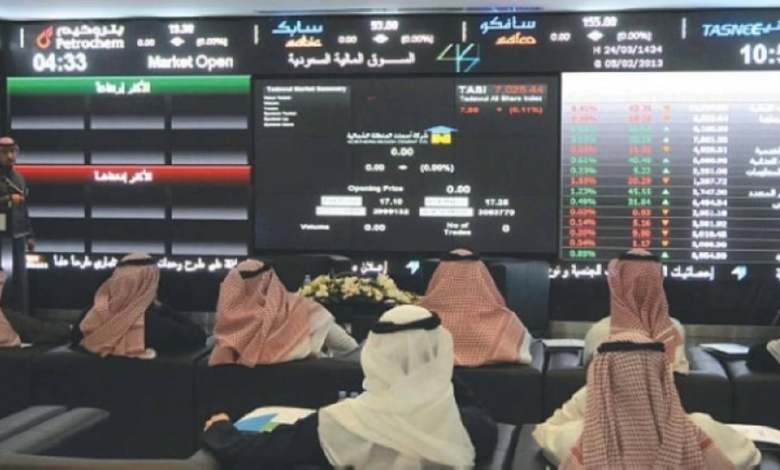

The Saudi Stock Exchange's main index (TASI) closed today with a notable rise, gaining 153.61 points to solidify its position above key psychological barriers and close at 11,321.09 points. The session witnessed strong buying momentum, reflected in trading volumes of approximately 5.8 billion riyals, indicating investor optimism and a return of risk appetite in the Middle East's largest financial market.
According to the Saudi Press Agency's daily economic bulletin for the stock market, 240 million shares were traded across more than half a million transactions. The session was broadly positive, with 207 companies seeing their market capitalization rise, representing the vast majority of listed companies. Only 55 companies experienced declines, indicating widespread gains across most major and supporting sectors.
In terms of company performance, shares of pharmaceutical companies, Rasen, Knowledge City, electrical industries, and Ma'aden topped the list of gainers, achieving strong gains that supported the general index. Conversely, shares of Najran Cement, Amac, Saudi Cable, Nama Chemicals, and Building Station were among the biggest losers. The percentage increases and decreases in the market ranged between 7.26% and 2.11%, demonstrating a healthy divergence in stock movements based on the technical and fundamental data of each company.
Regarding market activity, leading and large companies captured the lion's share of liquidity, with Saudi Aramco, Americana, Anabeeb, Alinma, and Saudi Electric Industries shares being the most actively traded by volume. In terms of value, Saudi Aramco, Ma'aden, Al Rajhi Bank, Amac, and National Commercial Bank shares led the way, confirming the continued focus of institutional and individual liquidity on stocks with high financial standing and significant weight in the index.
In the parallel market, the Nomu index closed today up by 278.13 points, to close at 24,013.03 points, with trades valued at 30 million riyals and a volume of 2.1 million shares traded, reflecting the continued growth and attractiveness of this market dedicated to small and medium companies.
This rise comes within a broader economic context, as Saudi Arabia continues to strengthen its financial market as part of its Vision 2030 objectives, which aim to diversify income sources and attract foreign investment. The index's stability above 11,300 points is a positive technical indicator, reinforcing confidence in the strength of the Saudi economy and the ability of listed companies to achieve growth despite global economic challenges. Furthermore, the increase in liquidity to nearly 6 billion riyals demonstrates the availability of cash and the desire of investment portfolios to establish new positions.