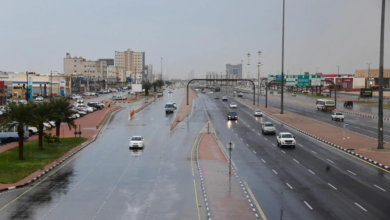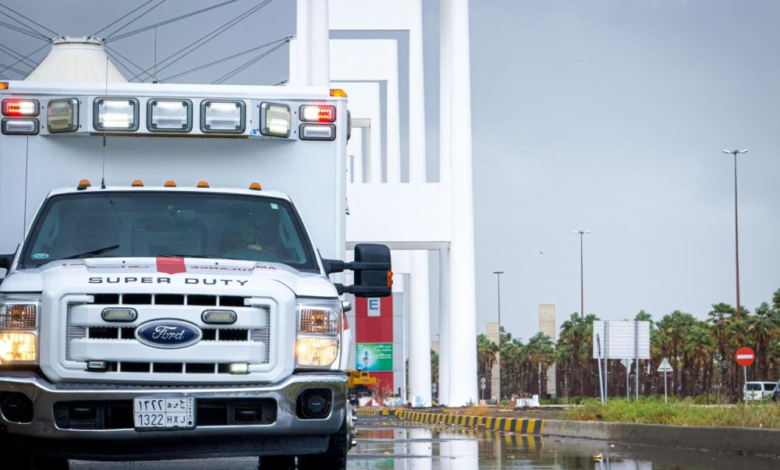

The Saudi Red Crescent Authority in the Makkah region announced it has raised its readiness to the highest level to deal with the expected rainfall, coinciding with official warnings issued by the National Center for Meteorology regarding heavy rain in the region. These proactive preparations reflect the leadership's and relevant authorities' commitment to the safety of lives and property. All available human and logistical resources have been mobilized to ensure a rapid and effective response to any emergency that may arise from the weather fluctuations.
The geographical and historical context of the rains in Mecca
The Makkah region is characterized by its complex mountainous terrain and surrounding network of valleys, historically making it prone to flash floods and water accumulation during heavy rainfall. Over the decades, the Saudi Arabian government has prioritized the development of Makkah's infrastructure and flood drainage facilities, along with strengthening the capabilities of emergency and rescue services. The Red Crescent's preparedness in Makkah is an extension of these ongoing national efforts, having developed mechanisms for dealing with crises and natural disasters that are among the best in the region, relying on the latest early warning and rapid intervention technologies.
The importance of the event and its local and international impact
Emergency preparedness in Mecca is of exceptional importance, extending beyond the local level to encompass regional and international dimensions. Mecca is the heart of the Islamic world, receiving millions of pilgrims and visitors from all corners of the globe throughout the year. Therefore, ensuring their safety during periods of inclement weather reflects the efficiency of the Kingdom's health and emergency services. The success of these emergency plans sends a reassuring message to the international community about Saudi Arabia's ability to manage and protect crowds under any weather conditions, further solidifying the Kingdom's leading global position in crisis management and mass gathering medicine.
Activating emergency plans and deploying ambulance teams
The Red Crescent Authority explained that it has activated comprehensive preparedness plans across all its ambulance sectors. It has also raised the readiness level of its Command, Control, and Medical Dispatch Center to monitor the evolving weather conditions moment by moment. This measure aims to direct field teams according to the highest operational standards to ensure rapid response to affected areas. The Authority has reinforced the deployment of its ambulance teams by positioning them at vital support locations within the most affected governorates, with a particular focus on locations near wadis (valleys), highways, traffic congestion points, and rugged areas that may be difficult to access under normal circumstances.
Statistics and capabilities of the Red Crescent in the Makkah region
To ensure comprehensive geographical coverage, the authority indicated that the Makkah region has an integrated ambulance system comprising 19 ambulance sectors, supported by 98 highly efficient ambulance centers operating around the clock. These centers are strategically distributed as follows: 24 centers in Taif Governorate across four sectors, 36 centers in Jeddah Governorate across seven sectors, and 38 centers in the Holy City of Makkah across eight sectors. In addition, there are field support and deployment points covering all governorates affected by the rainfall, in accordance with pre-approved operational plans.
Important guidelines for citizens and residents
In closing, the Saudi Red Crescent Authority issued an urgent appeal to citizens, residents, and visitors to strictly adhere to the instructions and warnings of the relevant authorities. It emphasized the importance of avoiding flood channels and water accumulations, fully cooperating with ambulance teams by giving way to emergency vehicles, and refraining from gathering at accident sites, as such behavior can hinder rescue operations and endanger the lives of others.
The authority also urged everyone not to hesitate to request ambulance services when needed, by calling the unified free number (997), or by using the “Isafni” application for smart devices, which allows the caller’s location to be determined with high accuracy via GPS technology, which effectively contributes to accelerating the arrival of field teams and providing the necessary medical care in a timely manner to save lives.